One thing that is particularly notable in the last few years, is that there has been an increase towards viewing games from a more critical perspective. On a note, that’s certainly good, it allows for a lot of nice in-depth analyses on people’s passions and it raises good discussions, let’s us see things from different perspectives and so on.
But I feel like there’s also a tendency to over-criticize things, to the point where there’s barely any sense of fun to be had, often on the nitpicky side. I think every game deserves fair critiques, both positive and negative. However, when I say there’s a trend of over-criticizing, I mean that there’s a lot of focus on the negative aspects of a game, and without a good understanding of the subjectivity on what brings enjoyment in video games (or any form of media really) and the fact that personal preferences should also be accounted for. A lot of otherwise legitimate complaints start to feel misguided, as if the person may be missing the point of a particular game, or at least overselling a game’s flaws just because it’s not up to their tastes, even if it’s a solid game for what it is. (And there’s also a general lack of acceptance towards games that aren’t “perfect” either, even if a game is merely flawed, it does not make it automatically bad).
This is not to say that complaints about a game are bad by themselves, but more the fact that a lot of them may lack substance, or feel half-baked. Especially if it feels like a person is overselling their argument in an attempt to make a point, when a less excessive wording could help a lot in making their point feel more natural and thoughtful.
I get that a lot of these instances come from people watching or reading reviews from creators/sites they like and feeling inspired to do the same, but without the same experience in how to present their opinions or even general good wording, the difference between objective and subjective flaws (if there’s no compelling reason on why a particular thing is bad, other than it not being your cup of tea, then it shouldn’t be overstated or it risks making your point feel mute), understanding of emotional attachment towards media, and a whole lot of other things that I could keep listing forever.
I find that this affect even me and my enjoyment of games, as I frequently have moments where I start to think about these factors, and it gives me conflicting opinions. I feel as if I’m in the wrong for enjoy certain types of games and that I need a justification, other as to why I find them fun. It’s not a problem to accept that there are flaws in a thing you enjoy, but it certainly is a problem to keep yourself from enjoying games just because of flaws, and nowadays there’s a certain romanticizing of a “perfect” game, which doesn’t exist. It’s important to learn how to have fun with a game, by at least trying to learn what the game is proper. Some games don’t lend well to certain playstyles, so you need to keep that in mind when approaching it, learning not just the mechanics, but how a game asks you to use them.
It’s insane how popular “hot takes” seems to be, and that just sucks. It’s important to not let yourself be consumed by negative emotions, and things as seemingly harmless as focusing on what games you dislike do a long way into fucking up your mental health. Just believe me, if you do that too much, it won’t be long before it’s almost all that you ever do. And by that point you will be a little bit too obsessed with picking apart every single problem on just about everything in life that you happen to not fancy, it starts to affect your general thinking, and that’s just unhealthy.
I think thoughtful, rational and most importantly, non-obsessive discussion about our passions is the way to go, but keep in mind what I just mentioned. There is absolutely no benefit into acting so toxic towards anything, it drives all positive aspects away, and brings in all sorts of negativity. No rational person wants to spend time with anyone who’s obsessive and extremely toxic about their opinions, and that means eventually the only people that will actually engage with you are people that are just as obsessive, and you will just normalize this behavior, it will become your default-self. And even more, it might just destroy the actual passion you had for said thing you discuss about, and at some point you will just be participating in shallow flame wars rather than anything substantial.
This post took a turn, in tone a little bit, and it seems like the main subject just changed, but it’s actually the same throughout, just jumping through different topics related to the problem. It’s all about overwhelming negativity, and it takes many forms, even more than what I just mentioned here.
This might be a little unpolished, but it’s my first real post here, and I wanted to tackle a more broad subject to get the hang of structurizing articles, pacing, formatting and so on. Thank you for reading, and please, if you can take anything out of this, let it be to having healthy discussions and to not be obsessive about anything.
Here you will find a detailed summary of the general content you will find on this blog and what’s to come. With also a brief explanation of my inspirations and aspirations.
Hi, I’m Rainy, this is page is more or less like an About This Blog page, it contains detailed info on whatever you may need to know about it.
What do I cover on this blog?
Most often obscure games, or just lesser known games on otherwise popular series, generally old ones too (at least initially), as it’s what’s available to me (up until the DS). Stuff I don’t see people talking about too often, like arcade games, niche games, anything that gets less coverage than usual.
Essays, these will generally not be about only niche games, but rather the rare exceptions where I will talk about something more popular, it’s mostly discussing on broader gaming and series as a whole, as opposed to specific games. As well as my feelings on particular trends in gaming.
I try to keep a positive and light-hearted touch on my stuff, regardless of the subject, as I believe there’s already too much negativity out there. I will mention things I don’t like, sure, but it will never be scathing “hot takes” meant to blindly bash anything. Basically, I will try to avoid shallow angry reviews or anything with a condescending tone that you see across the internet. On a similar note, there will be no toning down of my feelings towards sacred cows, if I don’t like a game or an aspect of it, I will point that out. But I won’t be negative just for the sake of it, and will be respectful as much as possible.
While their style is different from each other, and you will hardly find anything that professional on this blog, their influence is still undeniable, in general the rather calm and sober tone, with a bit of fun thrown in the middle sometimes. That’s pretty much what I’m aiming for on my blog.
I do not use rating systems for the reviews I write, I don’t believe that numbers exactly convey the feelings a game gave me while playing it and it may or may not even distract some people from the review itself, at most there will be a summary of the ups and highs of whatever I’m talking about, the idea is more to get people interested on each game, while dissecting aspects of it in a rather brief manner.
I wonder why video game communities have such an obsession with controversial/unpopular opinions and “hot takes”. Most of these are reduced to dry statements with no weight to them and don’t spark any interesting or thoughtful discussion.
Special mention goes for Twitter. Every month it seems there’s a thread like “What are your most controversial video game opinions?” or something of the like. And while I’m very aware that sadly, negativity brings out more people than positivity, I still don’t understand why it seems to be so prevalent in gaming.
I suppose when there are so many people with so many different opinions, they all want their voice to be heard. But if that was just that, I wouldn’t really mind it. My problem more specifically is that it all seems like they want to be heard, but don’t really have anything interesting to say, no discussions to start, no actual foundation for their comments.
Take a look at any of these threads and see how many of them are actually people just saying things like: “(game) is overrated”, “(game series) is shit” or whatever, without really putting any substance into their claims. And while I know that some people just want to make a ruckus, and something as adolescent and immature as being obnoxious and edgy just to get people’s attention or generate fuzz while talking about trivial things is the one of the many things the Internet is known for, I just wonder why it’s the one thing people are so obsessed with, I simply don’t get it.
Maybe it has to do with maturity and age demographics. Twitter’s userbase is mostly comprised of kids, teenagers and young adults who still act and think like kids and teenagers. A lot of people in this demographic are still either not completely capable of dealing with their emotions, thrilled by the idea of making someone shocked or angry, unable to put their thoughts into a full paragraph or two with actual substance, not able to explain things calmly and rationally and most importantly, are really passionate about what they like to the point of taking things as a personal attack. With all of this into consideration, giving them a chance to recklessly just say their very vocal opinions that they can’t even explain properly without sounding needlessly angry is really just a recipe for disaster. (It doesn’t help that Twitter has character limitations, making it hard to actually form anything substantial without making a lot of posts, which people naturally wouldn’t want to do.
Nothing new in what I’ve been saying really, but still, I wonder why are they so attracted to this? Negavitity and especially toxicity personally drives me away from a conversation, not towards it. You could say that it’s due to age and all, but I think that’s not a fair assumption, as quite a good amount of young people don’t engage in that type prose, besides, I’m actually young too (not exactly a teenager and especially not a kid, but still young), so I don’t think it’s true, and it’s not the case of me being “too old to understand”. Especially because this admitely isn’t new, if anything, the mere capability of engaging in healthy discussions in these types of communities is what’s actually new. I try my best to stay out of toxic discussions, to present my thoughts and opinions in a nice and gentle way, because I really don’t want to offend anyway, there’s no benefit to doing such a thing to random people all because of something incredibly trivial. My whole aim with this blog in the first place is all based on bringing positive unpopular opinions and thoughts towards games that are either overlooked or maligned. And while I don’t think the solution is for everyone to make a blog too (I mean, unless you actually want to, that’s always nice), I just mean that there are better ways to present your opinions, a way in which everyone involved comes out fine, with no bickering, no fighting, no flame wars and the like.
Deep down, this whole article is my unpopular opinion, which can be summed up to this: Unpopular opinions don’t have to be presented a passive-aggressive manner; whatever you say should always have a rational and sensible argument behind it; the trend of using controversial or unpopular opinions as an outlet to just be toxic or provoke people needs to die (you’re not 8 years old, and if you are, you shouldn’t be on social media); people need to take media a little bit less personally (seriously, it’s unhealthy); hot takes are boring, most people just use the term when they’re about to purposefully be edgy and say something they think is really daring, but is nothing but trivial and that is really just a sentence that could have been better worded to avoid flame wars altogether.
Hot takes are often just an excuse to be toxic, amount to nothing but quick and immature potshots at things you don’t like (kinda like playground insults, except worse), and ironically enough, despite what a lot of the people may think, hot takes are safe, bland, it’s the thing for a lot of Internet users to do, and it’s safe exactly because it doesn’t require much thought, it’s just the most basic and dry manner to present an opinion, and if I were to give a hot take, it would be that “hot takes are fucking boring” or something of the like. But I don’t do hot takes, I do the opposite of them (so a cold take?), being calm, polite and non-confrontational about my opinions as much as possible, since I like starting healthy and rational discussions, not flame wars.
So here are actually some of my unpopular opinions about video games (some of them might not even be all that unpopular anyway), presented in a form of a hot take with lots of “spice” and no substance and followed by a more calm and civil version of the same opinion, backed up by sensible arguments and no spice (or a “cold take“, I guess):
Battletoads is a shit game, it’s not even hard, it’s just annoying! I don’t personally like Battletoads games, I think a lot of their infamous difficulty comes from bad and dated design choices, programming oversights and just overall fake difficulty that isn’t necessarily really based on skill, strategy or anything of the like for the most part. The NES game (which is the most famous) is filled with questionable choices and glitches, which to me aren’t really interesting ways of making a game hard. There are a lot of aspects I do like though, and I think the series has potential actually, but I believe the idea of taking overly flawed NES game as a basis for what the series should be is quite misguided. The Battletoads arcade game is immensely better as game, having a lot of the core experience and great aspects of the original, but executed more effectively without being so based on simply frustrating the player.
Too wordy for you? Well, it is pretty wordy, I’ll admit, but here’s an example that isn’t as wordy but is still just overall better (non-aggressive, more substantial).
Hot take:FPS games suck. I’m not into FPS games, they’re not my kind of thing, I could never really get into it, none of the gameplay aspects are really what interest me in a game.
THE NINTENDO 64 IS A SHIT CONSOLE AND IS OVERRATED!! I’m don’t share the hype people have for the Nintendo 64, I just think the console is too underwhelming with its library, barely having variety in games, lacking in tons of genres, having little quantity and most of what could be considered quality has just aged quite poorly and was better done in other systems. Its controller while a novelty at the time is unreliable nowadays and its analog stick is very fragile. It doesn’t help that a lot of the games on it aren’t my type and the ones that I like are few and far between, or just plain missing. While I understand that people like it and are nostalgic about it, despite liking some of the games on it and finding some qualities in it, I just don’t think the system is as good as its comtemporaries, its predecessor or its successor, despite the fact that I think it had quite a lot of potential and I don’t neglect the importance it also had, even if I do think said importance is maybe overstated.
(Quick advice, don’t call things “overrated”, it just makes you look condescending and jerkish about whatever you’re talking about and the term doesn’t hold any substantial meaning other than “I don’t like this thing a lot of people like, and they are wrong in liking it”, I’d also avoid calling things “shit” or whatever if you want to keep things civil).
Ok, I’ve been using examples that feel too aggressive, but there’s one that’s not really aggressive, but still could be worded better.
3d platformers and collectathons are so boring, I don’t know why anyone would ever want to play them I find 3D platformers, especially collectathons, pretty boring. I’m not against 3D games or even all 3D platformers per say, but the ones where you just go around collecting stuff aren’t for me. It doesn’t help that a lot of 3D platformers have these elements. I know a lot of people like it, but it’s not really for me.
Here, the hot take example feels a bit condescending when it says “I don’t know why anyone would ever want to play them”, putting things as more of your personal preference instead of making it sound overly factual also help.
I could probably put a dozen more examples, but I think this does enough to explain what I mean, and to hopefully showcase why having a less negative approach is more benefitial and can only lead to more evolved and mature communities. And while some of these examples are a bit too extreme, I think the message is still clear. You don’t have to make really long posts to be polite, that’s just how I tend to be in general, a bit too wordy for my own good. But my point is that we all can be so much nicer, and it doesn’t take much, the discussions can be better if done with more substance and less aggression, and most importantly, please don’t feed the toxic side of things, let it die, we don’t need that, no one needs that.
Maybe we can ask less about negative opinions on media, and more positive opinions on them, once you get out of that angry mindset, everything feels way more pleasant. What are your positive opinions on media? What video games, movies, animations, comics, books, music do you like? And why do you like them? There’s so much that can be discussed in this area, celebrate the things you like, even if you get less attention, it just feels better, that alone makes it worth it.
I have no pretensions that many (if any) people will even read this essay, but I don’t care, it makes me feel good by doing it, and feel even better if someone else reads it and enjoys it. Again, you don’t need to make a blog to do that, just be nice, it’s pretty easy and better for your mental health.
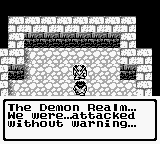
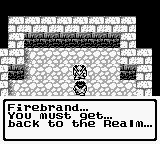
‘twas long ago that the Demon Realm faced annihilation…
From elsewhere they came, and none could stand before them.
Yet when the hour seemed darkest, a blaze of red swept across the realm, and naught remained of the foe.
Several hundreds of years later, this accursed history is about to repeat itself…
For a GB game from 1990, this one is quite good, it barely feels like an early title. This is slightly more atmospheric than most Game Boy games of the time, or even that came later.
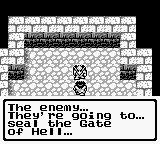
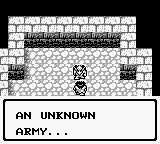
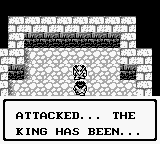
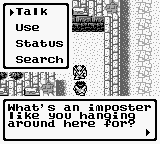
The dialogue in this game, while quite typical of the time in terms of character types and tone, is a far cry from most games in terms of setting and character designs. You play as a demon, in a hellish world called the Demon Realm. And all these words that you barely see in games of the time really work to set it apart.
Sure, I’ve played the fan translation, but although the official localized version naturally censors the demonic themes as best as it can, the overall thematic is still there and works great, since it’s so visually striking, but we’ll get to that later, now let’s just talk about how the game starts.
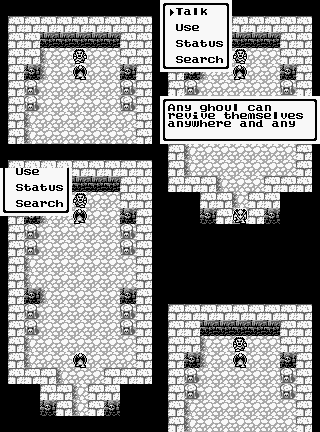
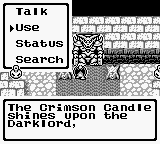
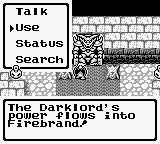
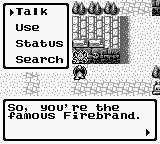
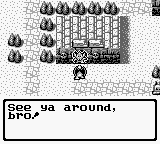
The fan translation is great and feels pretty official at all times.
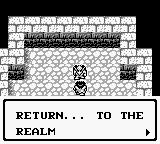
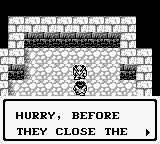
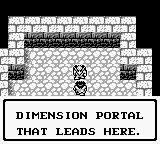
The US dialogue is perfectly serviceable, especially for the time, but it’s quite censored and naturally, some elements feel a little weird because of that, although the biggest problem is how the text is formatted, it’s common for handheld games of this era to have really big fonts which makes pacing of the dialogue awkward, compare with the fan translation above. It’s not a big deal though, and I recommend play any version you want.
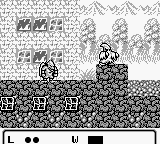
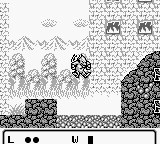
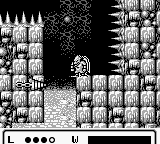
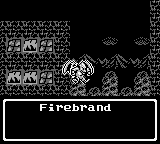
You start out in a top down typical of RPGs of the era, as you’re warned about being attacked by other demons. They ask you to take heed, and so you do. When you leave the room, the game switches to a platformer, and right off the bat, the visuals are pretty good, with smooth animations for the sprites and elements on the background, such as the fire. The background and foreground is quite detailed too.
Look at all the details in the background, the trees, the clouds, buildings and so on (you can’t see here, but the animation for the fire on the windows is quite smooth too).
This game came out only a year after Super Mario Land and Castlevania: The Adventure, those games had very simple sprites and backgrounds, so it’s impressive that just this early Capcom managed to make such a good job, already mastering the visuals.
The game itself plays pretty smoothly for the most part. It starts out a bit harsh, not because of difficulty, but the low health, you can only take two hits, but taking the series this game came from into consideration, that’s standard, and in contrast, the level design is quite generous.
The level does a good job teaching you how to play. You can fly by pressing A in air, when you do a meter depletes, you can cancel out of flight at any time, and yes, it’s essential to know how to use the flight. You stay in place when it’s on, moving only horizontally. So you have to tap A to descend properly and not waste the meter completely, when you touch a surface the meter instantly goes up again.
B lets you shoot a projectile. You can also cling to walls, and that’s pretty much it.
The game manages to do a lot with these simple mechanics, all the levels ask you to gradually get better at all of these, and by the end you will have to master them.
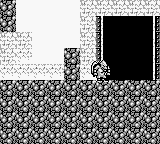
At the end of the intro level there’s a boss, when you beat it, a gate opens and you leave. The game switches back to the top down perspective and you’re in a world map, similar again to an RPG. It even has random encounters, and they work like in Zelda 2, putting you a sort of challenge field where you have to beat enemies, if you die you just go back to the world map, the game has lives, but the game over also just returns you to the world map, so dying in these isn’t really a problem. We’ll get to game overs and how the game handles them later.
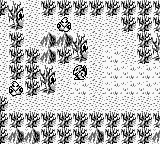
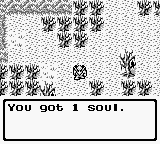
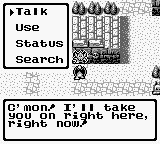
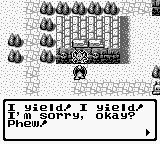
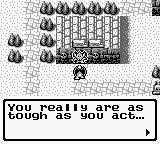
In this world map, you’re given no direction, so you’re just meant to explore on your own, which I recommend. When you beat an encounter, you gain a number of souls, based on the difficulty of the enemies in it, of course you won’t know what souls are at this point, but you’ll just assume that’s probably good. So when you walk a bit, you will see two paths, both blocked by figures that just like the enemies you’ve seen on the intro level, when you talk to any of them, you will have to fight them, defeating them opens the path. Both paths meet and suddenly there’s only one way. It doesn’t lead really far, and eventually you will inevitably run into a town.
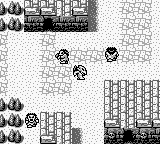
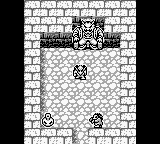
It’s a typical RPG town, there’s a place you can exchange your souls for Dark Power, a place where you can unknowingly use as a respawn point, and someone who gives you direction for progress, which ties into the story.
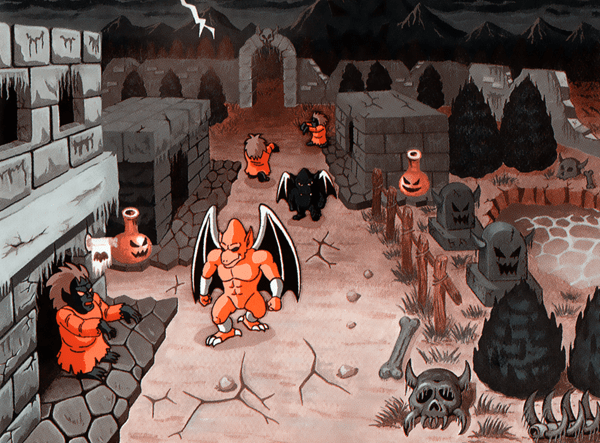
This great artwork gives the towns even more atmosphere, the game conveys well enough, but this art really captures your imagination, if for some reason Capcom decides to bring the series back (which I doubt considering how poorly the last game sold, but we’ll get to that when I cover that one), I’d love for it to have the same atmosphere you see here. Image from Capcom Database (capcom.fandom.com)
I keep mentioning things you wouldn’t know what they are when the game talks about them, and that’s a good time to explain it. Souls are currency, you wouldn’t know that when you start the game, Dark Power are lives, you also wouldn’t know that when starting. These would probably be explained in the manual, so I’m not gonna complain, but I seriously didn’t know what exactly those were before I noticed the fact that after I bought Dark Power, I seemingly died but didn’t get a game over until a bit later. Then it clicked with me, and I checked the Dark Power I could see on the menu on the overworld and it matched the lives counter (which you only see when in levels or encounters).
While I think this could have been told to the player better, I don’t mind it because I know this was made in times where this stuff would be in the manual, and now that I know, I think it adds to the narrative and atmosphere, transceding the abstract concept of lives into something that makes the demons feel more magical and powerful.
As some NPC puts it “If your body’s destroyed, you don’t need to recite the Cursed Words if you have Dark Power”. It’s a neat way of explaining it in-universe, it’s a thing that makes sense for them, not just to the player, and I think that’s cool.
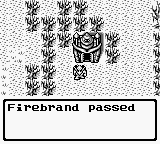
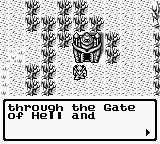
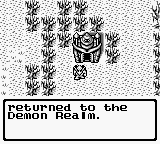
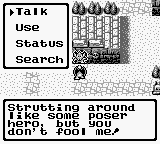
“Cursed Words” by the way are technically a few things: Coming back from the game over will mention that Firebrand recited the Cursed Words. When you talk to a NPC that’s in every town in a building, they will mention Cursed Words and that place will act as the new respawn point for every game over. And finally, something that makes a lot of sense and is quite the genius way of handling it, which I’ve only understood after I talk to this NPC I just mentioned (as quite a lot of NPCs talk about Cursed Words). They say the following:
When I saw that, I immediately knew what was going on… The “Cursed Words” are the password system! That’s so cool, it even finds an in-universe explanation for the passwords, something that makes sense in the narrative somehow! Sure, it’s obtuse as hell to even get what they meant before talking to this one NPC, and it doesn’t even mention the respawn point aspect and so on, but it’s quite commendable that they went this far to keep in with the game’s theme and atmosphere. Another neat thing about the Cursed Words is that in the Japanese version, they actually look like words, since the game uses a hiragana system for text, which is used in the password, that’s naturally the type of thing that gets lost in localization sadly, but that’s to be expected.
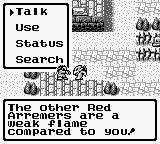
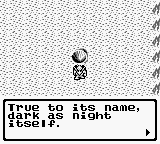
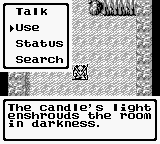
On the subject of NPCs and not understanding some things, I think this is a good moment to talk about a specific line someone in the first town says: “The Darkgleam… You’d better run if you see its rays or your soul will be destroyed. Even the Cursed Words can’t put you back together again.”
I’ll just go ahead and say that I have no idea what they are talking about, as I don’t recall anything like this in the game. It’s as if they’re talking about some sort of ultimate game over, but that never happens (thankfully). You’re able to retry how many times you want.
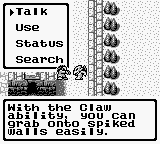
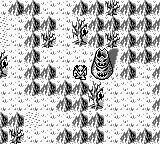
On a similar note, I feel there’s a probably with communication in certain moments, here this NPC is talking about the Claw ability, which is good, but it doesn’t explain at all the fact that you have to shoot at spiked surfaces to create a wall that you climb on for a temporary amount of time, worded like that, it sounds like you just get immune to spikes on walls at some point or something, which is not the case.
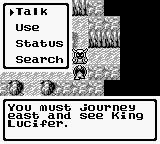
So let’s just move on. In this first town, there will be a major NPC that will give you a task which serves as progress for the game and ties into the story, as I mentioned before. Almost all the towns have something like this in a way or another.
Since this is a review of the game and its mechanics, and I avoid spoiling things to a certain extent, I won’t really talk about most towns as they just serve the same purpose. I will move on into the main levels themselves.
They basically work as what would be dungeons in an RPG, and this is where game overs actually matters. Levels have checkpoints, when you get a game over, you restart at the last respawn point (generally a town). You keep your souls and your lives return to default, it’s not really too punishing, remember that you can essentially buy lives, and even find them in levels and in jars (which serve as what would be chests in regular RPGs, you have to stand on top of them and use search on the menu… Dragon Quest 1 style, rudimentary, but it’s ok).
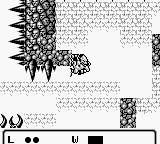
The levels get quite long as they go on, and are full of spikes everywhere, considering the mobility, it makes sense that the obstacles come more from the geometry of the levels, than the enemies themselves. The enemies respawn after you leave the screen for a while, it’s not too bad, but it can be annoying.
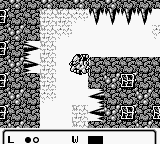
The level design is very vertically oriented and has a lot of parts where you need to use the wall jump properly to progress. Small sections where you have to fly and so on. All stuff that requires you to make good use of your abilities. There’s also plenty of exploration and fitting rewards for it.
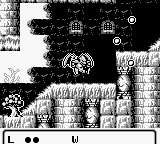
Here’s a little example, and a secret for you. There’s a barely visible health pick-up there, and it’s like that because it flashes and it just so happens that it was on the least visible frame when I took the screenshot.
As you go on with the game, you will get upgrades to your abilities. At the end you will have more health, better defense, powerful shots and infinite flight, and the game will want you to use those, don’t think they make the game easier, they technically do, but the game will scale up its difficulty significantly with these later upgrades, asking you to do stuff you wouldn’t ever be able to do without them, which is actually pretty good, but it’s certainly not easy. The game becomes insanely hard by this point. Also, certain early bosses become semi-regular enemies later on, appearing in random encounters. Of course, it’s not as intimidating, since you have upgrades. You feel really powerful, and it’s really satisfying to feel the growth throught the game.
Lategame in particular gets obnoxiously obsessed with spikes, to the point where in some parts I just barely can get through without being damaged, so I just “tank it”… which is probably not a good sign, the game isn’t cheap in general, but some parts feel a little like that. There are also quite a good amount of enemies that deal 2 HP damage, which is your starting health and they are here are there even at the beginning of the game.
Checkpoints are fairly generous, but everytime there is a boss, the checkpoint will bring you back to a part with a bunch opportunities for you to get damage, and it’s not even too far, but it feels like it’s just there to be annoying, to eat away your HP or lives. Yet again, more often than not, avoid damage is quite hard in these sections, so I just kinda try to not get hit by the boss at all, which is fine, but frustrating when you die but feel like could have done better with your full HP.
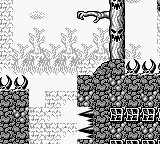
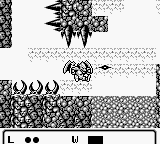
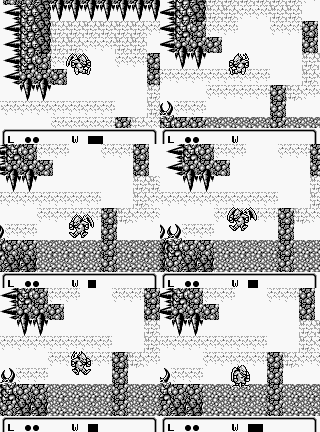
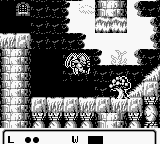
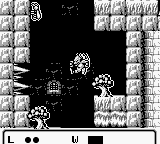
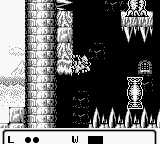
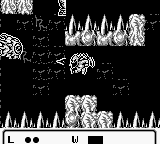
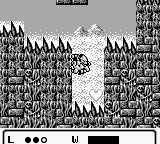
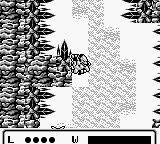
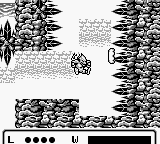
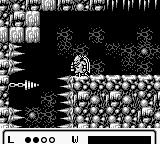
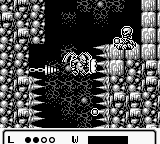
Couldn’t find anywhere else to put these, so here are a collection of spikes, note that these are different levels, but yeah the game took the term “difficulty spike” to a literal sense.
Sometimes I do get through these sections without a hit, but it never feels that it’s because I learned something or got better skills, it just feels like I got lucky. That’s my issue with that. Especially a part before you fight Lucifer.
As usual, I don’t want to spoil the final parts of the game, but I will tell you, it requires you to use a projectile that can create platforms on spikes temporarily, and use those to progress. It’s actually really cool, but it can be a bit stressful.
In general, the game is surprisingly generous, and my problem with checkpointing thankfully doesn’t apply to the final boss, you can retry it as much as you want, which is rare for a game of this era, and especially rare from a game derived from the Ghouls n’ Ghosts series. However, if you leave the game during it and use a password to go back to it, you’d have to go through quite a lot of stuff before getting back to the fight, as you can only get a password in towns, and obviously, there’s no town inside the boss room.
I don’t find that to be a big deal, but it can be offputting to some, and it’s important to remind you that since it’s a Game Boy game, it can be pretty frustrating if you’re fighting the final boss and your batteries died during that process. Again, not a big deal, but it’s one of those moments where you just sigh heavily and decide to take a break since you’ll have to start all over again anyway.
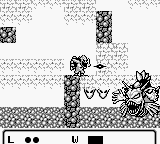
However naturally, it feels really satisfying to finally beat that damn boss. The boss itself isn’t really hard per say if you know what you’re doing, it’s just that he’s invulnerable for long periods of time and it’s a bit random, so it can get tiring waiting for an opening to actually deal damage.
Now, as I said, I don’t really want to spoil the final boss itself, so let’s talk about the localization and compare it to the fan translation, which is how I played it originally.
Ok, so right out the bat, I might note that I prefer the fan translation, but not because the localization is bad, it’s the standard stuff you’d see at the time, and despite changes in the more occult and demonic names, the tone and pretty much everything else is kept intact, so it doesn’t feel dumbed down. (Just like GnG used to have little changes, but wasn’t too different otherwise).
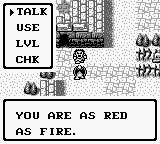
The real reason I prefer the fan translation is just my personal preference. I think the dialogue feels a bit more natural there, in the localization the spacing is a bit weird and everything is written in all caps (usual for the era), there are a lot of abbreviations in the menus. The story is pretty much the same, just told in words that wouldn’t outrage 90s American parents (the Demon Realm becomes the Ghoul Realm, the Gate of Hell becomes a “Dimension Portal”, and so on). However, the original translation is perfectly acceptable, and I don’t want to paint it as the lesser version in any way.
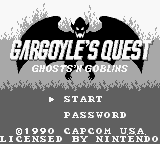
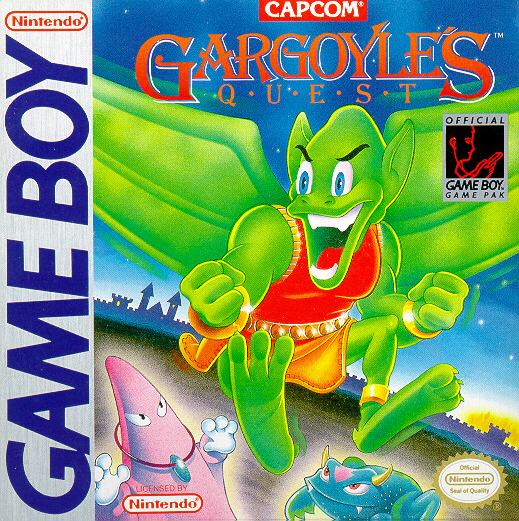
Despite being clearly green in the American box art, they still mention Firebrand’s “redness” quite often in the official localization, which is kinda funny.
I do think the demon themes do help making the game stand out, and besides, it’s what the story is supposed to be and it’s the more unfiltered version. The fan translation feels less wonky than the official one in the way its worded, it has little quirks which you would expect to see in an official one too, so it’s not like one of those fan translations that try to be too purist with literal translation or filled with swearing. It’s quite charming really.
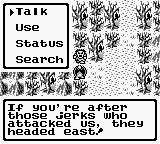
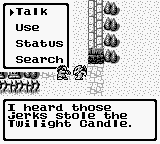
Some quips from the fan translation.
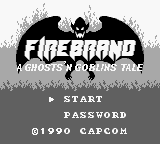
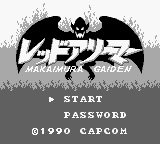
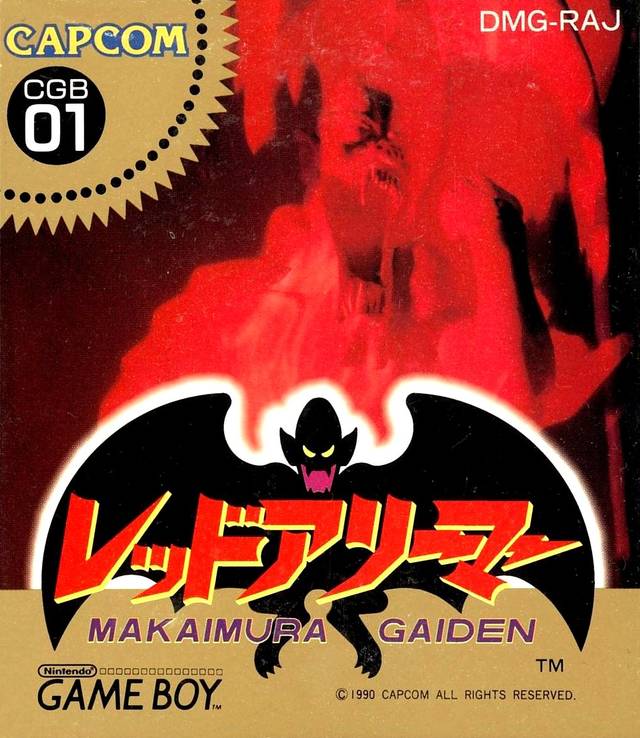
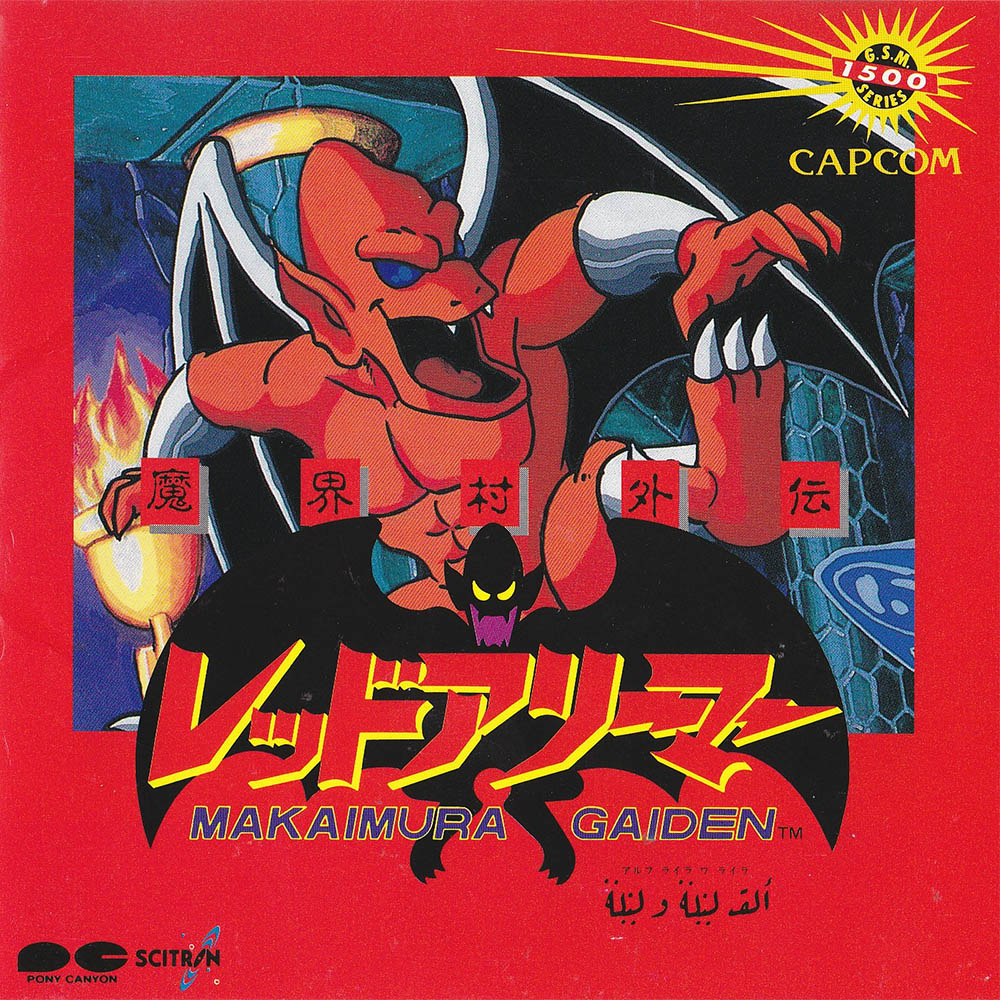
American box art and Japanese box art side-by-side. This time around, I don’t care much for any of them, in the American art, Firebrand was made green to coincide with the Gargoyle name and the monsters are cartoony and less demonic, it all works well to fit with the theme they were going with, while the Japanese art has the logo which looks nice but the art itself doesn’t look great as a game box art, I can imagine it looking cool somewhere else, but the way it is it just feels like something is wrong. (Images from Capcom Database)
It still uses the name Firebrand (which is the character’s name, Red Arremer being his species). During the entire playthrough, I never felt like I wasn’t playing an official localization. It actually just feels how the game would be if it was translated in a more modern era and whatnot.
As I did mention, the visuals are pretty great. And the music is no slouch either, it works greatly with the atmosphere of the game, having a sort of baroque feel to it. You can tell it’s supposed to replicate the sounds of instruments like the organ, harpsichord, violins and other stuff evocative of a dark period piece, even if it’s chiptune. The overworld theme is a favorite of mine, sounding peaceful, yet slightly melancholic.
Not everything sounds like what I described, but pretty most of it feels like it could be easily played by an orchestra and sound the same (it’s sorta like the compositions in Dragon Quest). In fact, just like many games of its time, there was an arrangement album available for the game, and the soundtrack sounds pretty great, although not all tracks for the game were arranged, but what is there is good. The art for the album is actually better than any of the box arts for this game, honestly. It looks pretty great, with the character on front and nice colors. Also, I definitely recommend checking the album, it’s really short.
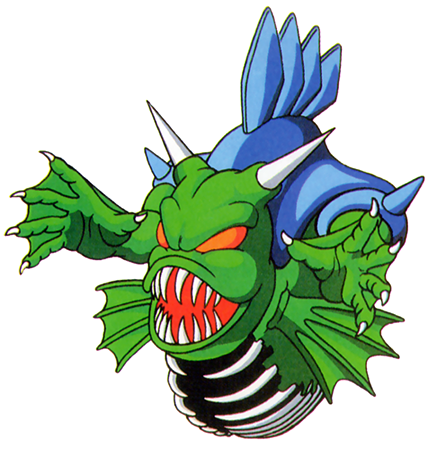
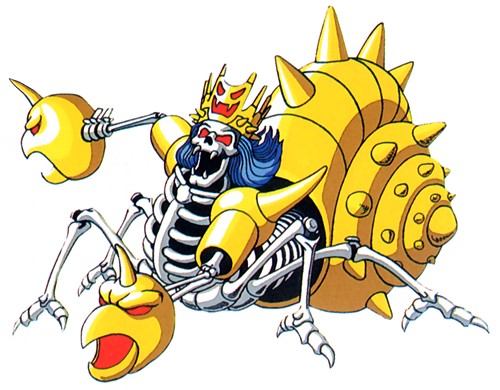
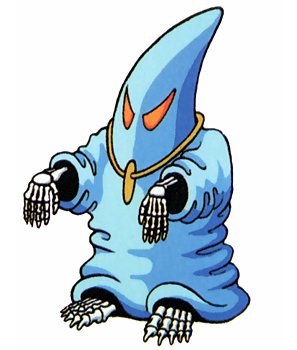
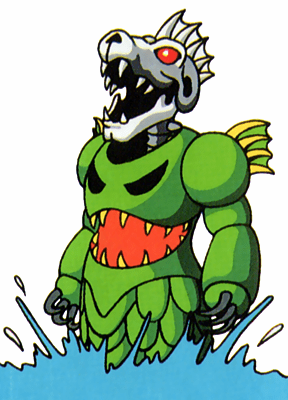
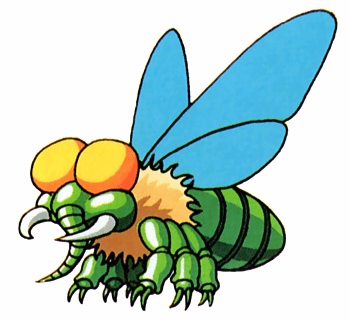
There’s a lot of cool artwork for this game actually, for the bosses, enemies and so on. Since I’m already talking about them, might as well share some with you here:
All images are from Capcom Database.
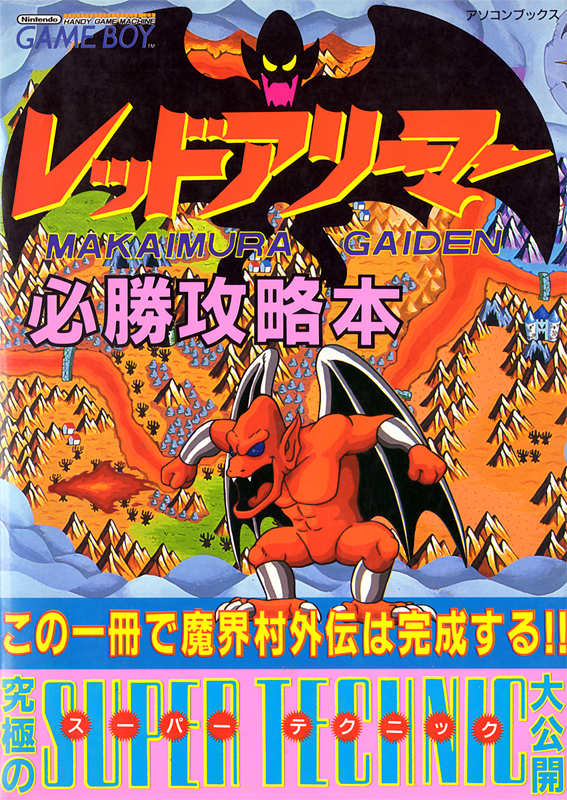
On topic of artwork, here are some miscellanous stuff:
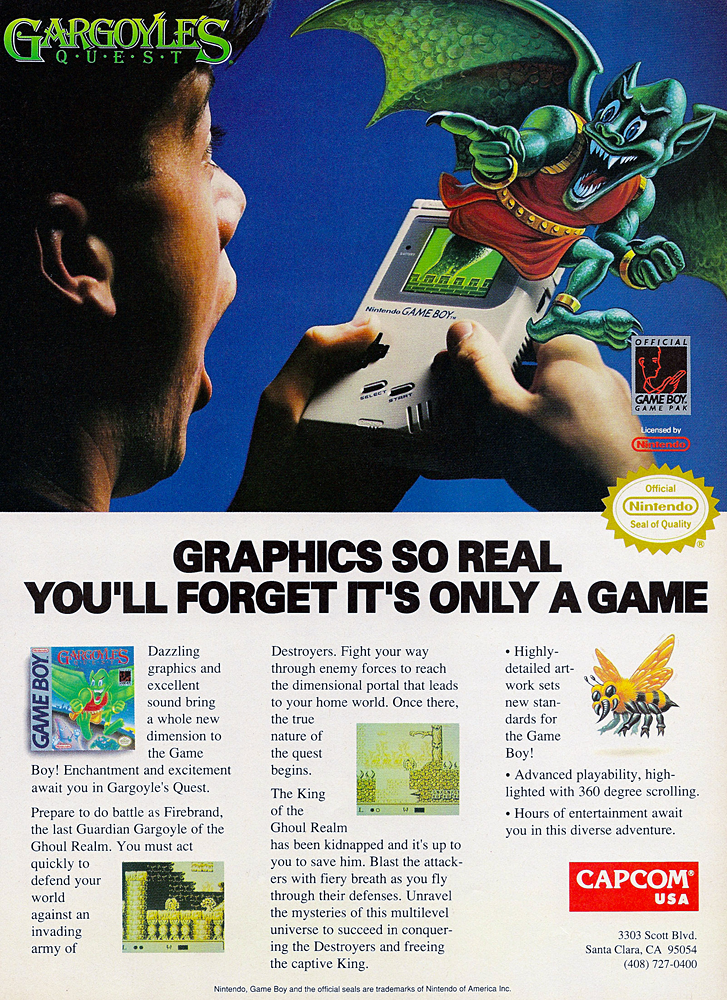
Left: Guidebook cover art. Right: American magazine ad. (Yet again, all images taken from Capcom Database).
Alright, so with that out of the way, let’s just get to the conclusion. The game is one of the most unique games I’ve played out there, well… there are more 3 installments to cover, which follow more or less the same format, so let’s just say it’s one of the most unique series, since what this game does, isn’t gone in the later games at all. But we’ll get to that later, let’s talk about this one specifically.
One thing I cannot ignore is how generous the game is, there are some moments that feel a bit sour with checkpoints, but that’s just because the levels can get quite hard and as a result, it feels like it’s longer to get back to where you were than it actually is. The levels do get quite long, but it’s not nearly as much as I initially thought, it’s just that there are a lot of activity going on.
The game, as I noted, uses a password system, and it’s basically the same as save system, except without the possibility of your save file getting erased when the battery dies. It keeps your amount of lives, items and souls all intact, which is great, so many games out there have passwords that won’t keep your items when you restart. There’s also the possibility of using certain passwords that will give you a different effect, such as starting out the game with upgrades, getting to the last town with all items and so on, but I’ve never used those. (I didn’t even know these existed when playing the game, since they’re not mentioned anywhere and are probably what you would find in a guidebook of the time, except for the last town one, that’s probably just something dedicated players provided).
Also, keep in mind, the passwords for the fan translation and the official one don’t match.
For beginners especially, I would heavily recommend buying Dark Power early on as much as you can (not too early though, get used to the get mechanics first), since it’s really cheap on the first half, but it gets quite expensive in the latter half. And if you really can’t get through the game I guess you could look up that one password that gives you upgrades from the start, and honestly, that is a way to increase replayability if you like the game but feel tired of starting out so weak (although there is no password that gives you all the upgrades from the start, which is a missed opportunity in my opinion, I could imagine that being a nice reward for beating the game or even a “hot topic” in a guidebook or magazine back then.
The game is quite short, as to be expected of an early Game Boy title, but it’s really fun and I think it is way more accessible and beginner-friendly than its parent series, by a long-shot.
And hey, Capcom is eager to remake a bunch of their games lately, so I could imagine a collection of remakes of the games in this little spinoff series.I’m not a big fan or remakes, but because of the idea itself, but because most remakes out there are missed opportunities to improve a lot of games, changing little more than the basics, and even worse, are often done only to games that are already quite good or great, as opposed to games that would actually benefit of a remake, games that have a little rough around the edges or big flaws and so on, but anyway… If they ever do that, there are many things I’d hope for, but one of them is definitely a New Game +, if I didn’t make it clear enough, starting out with all your upgrades sounds like something quite a bit amazing.
Anyhow, I think that’s it for this game, I’ve said all that I wanted, it’s a great game and I recommend it, definitely worth at least a quick look.
Thank you for reading!
Firebrand’s quest is done for now, but I will be back to play the other games in the series and see how they compare to this one, see you until then!
(Press CTRL + F and copy-paste one of the words below into the search bar that shows up on the bottom of the screen to skip to that particular part). • Introduction • Review • Conclusion
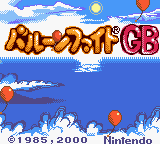
Image from nintendo.co.jp
Introduction
When it comes to a site about niche and obscure games, overlooked stuff, few people expect to see Nintendo games being covered here. And I understand that, as many of their series are popular, and even their less prominent series that are bound to taking a hiatus once in a while are all considerably well known. But because Nintendo only sticks to certain series and drops most of their other stuff as time goes on, only casually referencing it, it’s to be expected that a lot of their games may fall into obscurity. While I don’t think the name Balloon Fight is obscure, I’m sure a lot of people who have heard about it may have never played any of the games, or only played the NES game.
Fair enough, and that’s where I come in. I want to talk about these types of games when it comes to Nintendo, I will probably never make a review talking about most main games in their prominent flagship series (spinoffs are OK though), although you may expect me talking about some Zelda games, as while the console stuff is extremely popular, I’ve noticed the handheld games are considerably overlooked, at least the Game Boy ones… the ones that aren’t Link’s Awakening.
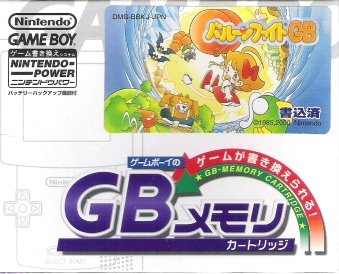
Today, I’m not talking about Zelda though, it’s Balloon Fight time! More specifically Balloon Fight GB, which I thought was the last Balloon Fight game (turns out there’s also Tingle’s Balloon Fight and maybe more?), and probably the best one. The game was released through a Japan-only service called GB Memory or Nintendo Power (which has nothing to do with the American magazine), where you could download games for a blank cartridge, or buy a cartridge with a loaded game and then download more in some machines you could find in places, definitely a cool thing that I wouldn’t mind if it still existed for newer system (If you want a physical version of a download-only game? That would be so cool!). It came out on a big box, with the cartridge, a poster with the artwork, and a little badge thing with the game’s artwork, which is so cute! I’m too excited about such a minor thing, sadly I don’t have of those, so I can’t show them here, you can look it up though, I’d love to have all of those someday, and I will definitely show it here whenever that happens. Anyway, enough, let’s go on with it the actual game.
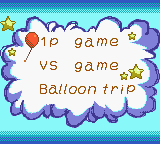
When you start up the game, you get 3 playable modes.
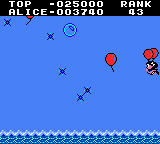
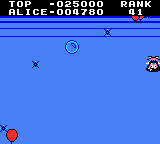
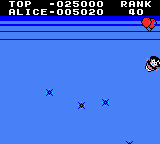
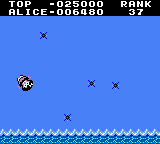
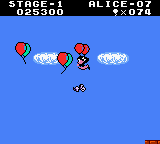
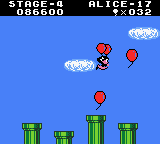
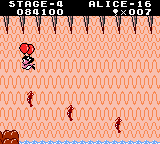
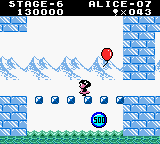
Balloon Trip is just like the original, an endless mode where you get balloons and avoid obstacles. There’s also a bubble that stops the screen from scrolling, which is probably a hazard.
As you can see, it’s very easy to die in this mode. Needless to say, I’m not good at it.
This was basically one of the main draws of the original game, but here it’s more of a little bonus, it was common at the time to have stuff like this being considered bonus, as the standards of games changes. To the point of being considered merely a minigame.
Nowadays the only way of finding something like this as a standalone game is on mobile phones. There are a lot of those that look like really old arcade games, back when points were the main draw, and we’re back to it again, just with leaderboards. It’s kinda funny to think about it.
But that’s besides the point. The original Balloon Fight was more of a battle game, where you pop other people’s balloons until only one lasts, either against CPU or another player, but here that mode is also relegated to a bonus mode, and it’s only available for 2 players, unlike the original.
So if both are side modes, what’s left? Well, this game has a Story Mode! The game calls it 1p game. But there are actual levels and platforming and a little story, so I’ll call it Story Mode. It’s basically the main game, as there’s the most put into it.
You play as Alice, who is out to save her brother. That’s the story, a single sentence, but it’s fine because this game definitely doesn’t need anything more than that. It’s Balloon Fight! That’s like wanting a big story out of Clu Clu Land or Ice Climber.
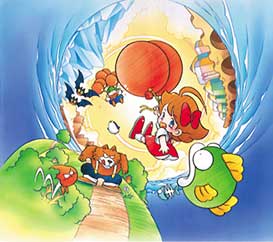
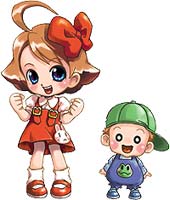
A newer artwork of Alice and Jim (the little brother), there’s no date on when this was made, but it’s on Nintendo’s official site for the game, because of the different artstyle and shading, I’m assuming it’s not from the same time as the original artwork. Judging by the look of it, it’s probably from the early or mid 2000s. Yes, it’s this low-res on the original site too.
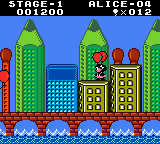
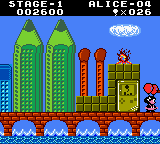
Anyway, that’s that. Let’s get to the gameplay. The game autoscrolls and has level design made with that in mind. Little platforms here and there, and obstacles that require you to dodge them. There is a problem with some foreground elements looking like they are in the background.
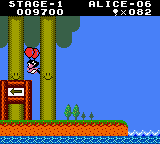
These she’s standing on blend in with the background a bit, at least when you first see them, which can be a problem.
The controls are a little floaty, as you would expect, there’s momentum and you have to keep that in mind, if you just hold a direction or press the jump button too much you will fly out of control. So keep that in mind. It feels more normal when you’re just walking on land though. You can’t really just control your direction by holding the button, you have to hold the button and the press the fly button to move where you want with a bit of momentum.
Alice is very bouncy, so I really mean it when I say that you shouldn’t just hastily press the fly button and be careful, as if you bump into the edge of the screen or any object, you will bounce back which can be a problem. It’s not as hard to control as it sounds though.
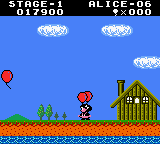
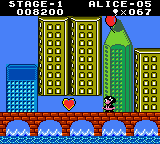
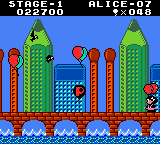
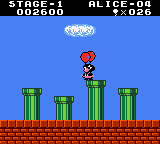
You go around collecting balloons in the rest of the game, except there’s platforming and more complex obstacles involved, sometimes a balloon with P on it shows up and if you grab it, it makes you invincible for a while while you flash, classic Nintendo stuff.
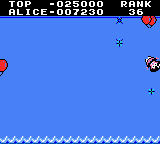
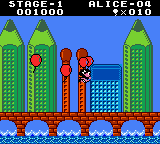
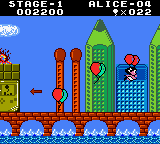
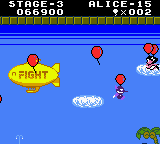
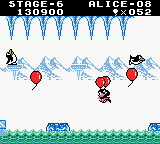
When you get a certain amount of balloons on the levels (it seems to be 20 consecutive balloons), double balloons start appearing. It’s not too hard to get balloons, as the hitbox is very generous, it counts Alice and her balloons (but the autoscroll and momentum can make it difficult). So if you just touch the balloons with your balloons, it counts as you getting them (How many times did I say balloons there? The word starts to look a little weird now).
Double balloons
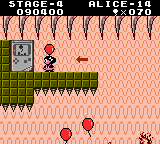
Same goes for damage though, if something touches you or your balloons, you will lose one, if both pop you will fall. It will pop only from above, if you make contact with something below you, you will just bounce, unless it’s an insta-death object/enemy. If you fall on a solid surface though, you can tap down to make another balloon (or two). That’s the main gameplay for you. You can also press B to release your balloons. As the game goes on, it will expect you to drop your balloons for some sections and then quickly make more balloons to not die.
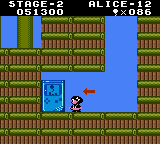
In levels you will find a Game Boy you can enter on to get into a bonus.
In the bonuses, you have to collect balloons, if you get them all you can get a 1up.
If you get all the balloons in a level (it’s always 100, but it can increase with the double balloons I mentioned), you get a perfect rating and a 1up. As you can see, it’s really easy to get lives in this game. It’s good, because this game can get hard as it goes on.
When you beat a level you can save. Although your lives don’t save, so you always restart with the default 5, which is fine, as I said, it’s really easy to get lives in this game.
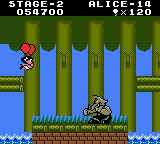
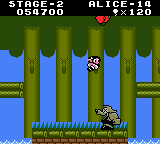
Some levels have a boss, and you can beat them by pressing B to get off your balloons and bounce on its head (which launches you back into your balloons).
Speaking of that, some areas require you to sacrifice your balloons to get through a narrow passage, I actually didn’t know about releasing the balloons, so I just used to let the autoscroll pop-up my balloons. But this makes a lot more sense.
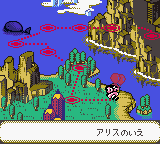
There’s a world map, where you can return to a level, if you start any level, you can’t exit it, even if you already beat it. Considering how fast it is to reset GBC games, I’m not bother complaining about this at all, just noting it because someone might not like it.
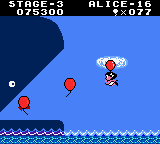
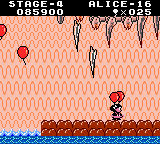
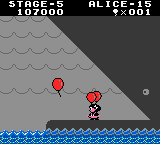
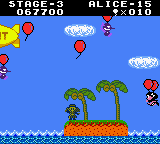
An interesting thing about the levels is that they have a bit of a narrative context going on, which is nice. In level 3, you can see some whales in the background, at the end, you enter in a whale’s mouth, which is the next level (the whale even surfaces out of the sea in the world map!), in level 5 you start out coming out of the mouth.
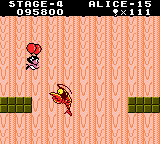
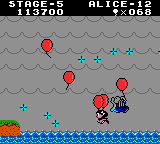
The ballooned opponents from the original Balloon Fight start to show up as enemies in later levels, and they make a godawful noise while they’re on screen. The big fish from the original is also here, and just like the original, it shows up when you stay too close to the water for a long time, and it’s easy to dodge.
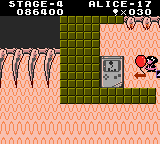
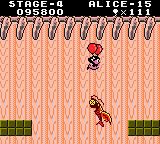
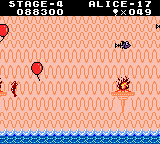
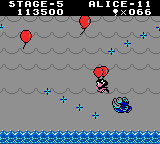
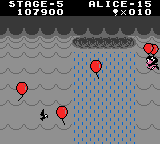
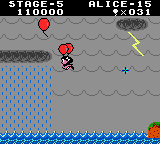
About enemies, most of them just pop your balloons (if they hit you from above), but others make you bounce in the opposite direction when collided with, and certain enemies and hazards are insta-death, like the blue lightning spark. In that case, the balloon hitbox can be a problem, as it counts and you die if just your balloons touch the spark. As for hazards, they start out typical, but get harder as the game goes on, level 5 having heavy rain that pushes you down, meaning you have to get out of it as fast as possible, otherwise you will go straight to the sea, touching the water doesn’t kill you, even when submerged you can go back, but if you sink off-screen you’re dead.
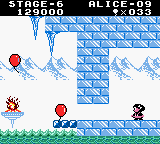
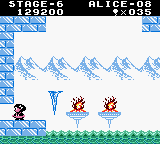
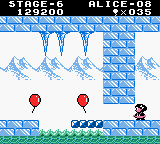
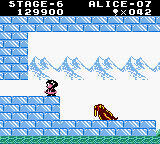
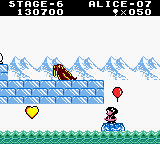
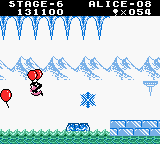
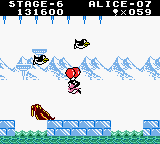
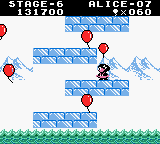
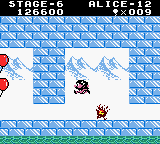
Stage 6 stands out as it’s more platforming than flying, having a lot of sections where you need to stay without balloons, it’s pretty hard, as it has ice physics, and you still bounce around, which can push you back into enemies.
Stage 8 will have you alternating between both quite often, and is one hell of a hard stage. This is where the game goes from cute baby platformer to a platform hell game with no mercy. This is where Alice’s bounciness becomes a problem, there’s so much stuff that requires precision and you bounce so easily. The boss also shoots projectiles which one-hit kill you, so needless to say, I had to farm for lives multiple times, in my winning run I came into the level with 19 lives! (I won with only 6 or so remaining).
Visually, this game looks great, I love how colorful it is, and everything has that Game Boy Color charm to it. With little details and soft colors, I prefer this look over NES games, it seems to me like the GBC actually uses more colors or is significantly more powerful than the NES, but don’t quote me on that, as I have no source on that.
The colors give the game a pastel look, which is cute. The music is good, it’s the Balloon Fight music from the NES, with some new stuff here and there, it’s all pleasant and what you would expect from a game like this, most of it uses a leitmotif theme (where a recurring melody is utilized in different ways, tempos and rhythms), like Super Mario World, Yoshi’s Story, Super Mario Land 2, Wario Land and many other games.
Alice’s sprite looks a bit weird, but I think that’s just an aftermath of this game actually being an updated re-release of an early Game Boy title. Just like what happened to Link’s Awakening and other games, this one got updated to have color, but it was only released in Japan, while the original apparently wasn’t.
Conclusion
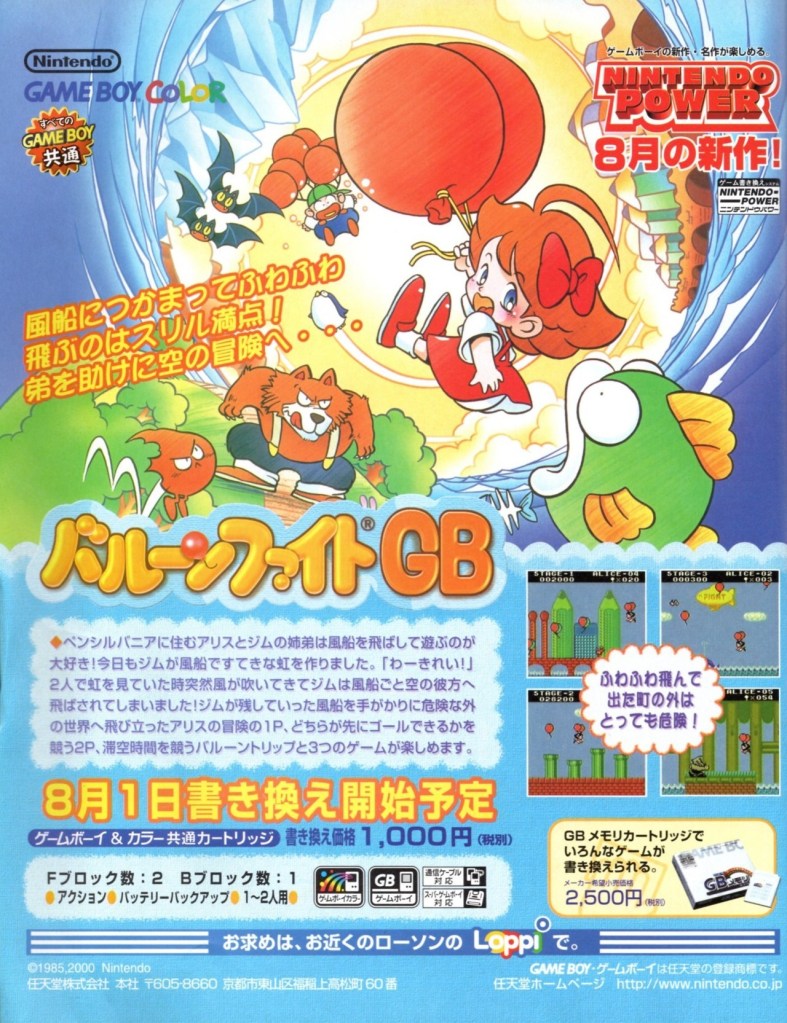
Let’s end this with this beautiful flyer for the game, it’s the only picture of the artwork in high quality and large resolution, and it’s great. (Image by vgprintads.tumblr.com)
This game was released in 2000 and it’s part of a bit of a trend of the time, where older simpler games got little remakes or new titles in portable consoles. It was a great way to show how far we’ve come, as the games were significantly better than their original counterparts, be it because of beefier hardware, or better understanding on the developers’ part. It’s the case with Balloon Fight GB, being the best Balloon Fight game. A really neat title, and I bet it would be a nice free eShop game nowadays.
Considering Nintendo is playing around with the mobile market, they could even do a new release of this game and other classic titles, like SEGA does with their SEGA Forever stuff.
I’ve got more to talk about that I thought, considering the simplicity of the game. It’s a nice arcade experience, which we don’t get from Nintendo anymore, I definitely like it. I’d love to see any new game from Balloon Fight, doesn’t need to be even a re-release, it could just be the equivalent of this for a new system. Like a cheap eShop game that has a more modern feel to it, 16-bit style visuals and maybe a bit more levels. But at this point I’m getting beyond the point of this article, this is not about the potential of a modern Balloon Fight or anything like that, it’s about Balloon Fight GB, and I think I’m done here.
I recommend checking it out if you feel like, it’s always interesting to play any more obscure or forgotten Nintendo game, considering how overly popular most of their other series are. I will definitely talk about more Nintendo games in the future, and I will stick to similarly overlooked, obscure or forgotten stuff, because even Nintendo makes niche games sometimes (or at least they used to, I don’t think they really do that anymore, but I’m out of touch, so take that statement with a grain of salt).
(Press CTRL + F and copy-paste one of the words below into the search bar that shows up on the bottom of the screen to skip to that particular part). • Introduction • Review • Conclusion
Introduction
There are many third-party publishers and developers in the game industry that are very well known and have been around for a long time. Most people will mention Capcom, Konami and Namco, if they have more knowledge they might mention SNK, Atlus, Tecmo, Nippon Ichi Software and a whole lot more. But one company that generally gets overlooked is Jaleco.
Jaleco actually went bankrupt in 2014, with their IPs now being onwed by a company called City Connection.
I’ve played a fair amount of games by this company, or at least know about a good amount of games that they’ve made or published. Jaleco is interesting, despite not being too notorious, most people who’ve played some of their output will tell you positive things about most of it, but I believe none of their games ever became more than cult classics or had more than a niche following. (Although they seemingly were more of a publisher than a developer, so that might be a reason too).
If you see some of those “Worst Game Art” articles or videos, then you might actually see them being mentioned, as at least on the US and Europe, they often had some notoriously bad box art (such as the infamous Irritating Stick for the PS1, Rival Turf and Brawl Brothers for the SNES or Karnaaj Rally for the GBA). Which may have contributed for their overall obscurity, as people generally avoid buying games with ugly art on the cover.
Enthuasiats of niche games and hidden gems may be familiar with some games like the Rushing Beat trilogy for the SNES (which had a different name for each game outside of Japan for some reason, so the series had a rough time catching on with the general public) and Avenging Spirit for the Game Boy, a cute game that I will definitely cover in the future.
Ugly cover art or not, most of the time when you see someone talking about one of their games, they will mention that it’s a pretty solid title, maybe it has some rough aspect to it that doesn’t make it amazing, but it’s rarely bad in quality.
The game we’re talking about today is one of those solid titles. And indeed, might not be amazing or stand out in some major way, but it’s a pretty fun game for sure.
We’re talking about a Japan-only game called Ikari no Yousai 2 (translated as Fortress of Fury 2) for the Game Boy.
Review
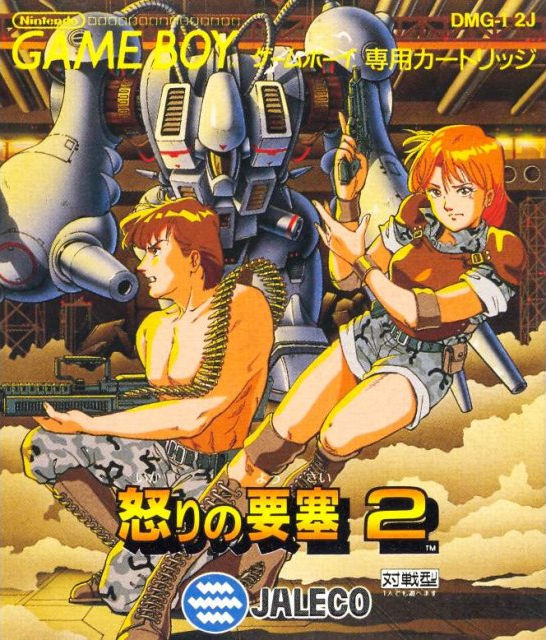
Despite Jaleco being known for bad box art outside of Japan, the art for Ikari no Yousai 2 is great! To be fair, this was made in an era where box art quality varied from region to region. (Image from Play-Asia).
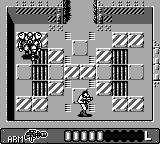
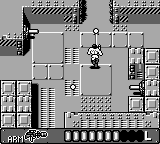
Ikari no Yousai 2 is an overhead shooter where you move rather slowly from room to room completing challenges. There is no continuous scrolling when going to a different room, rather it works like in older 2D Zelda games, such as A Link to the Past and Link’s Awakening. In fact, progression is quite similar to the dungeons in those games.
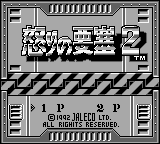
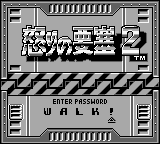
Despite the title screen, the entire game is in English.
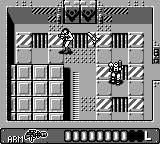
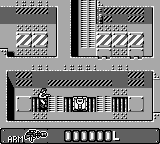
You explore each room of a fortress, trying to get to the exit. Along the way you will find enemies that respawn when you come back to that room (with some exceptions), again just like in old Zelda games. They’re pretty easy to deal with and their mobility is similar to yours, so it’s never overwhelming.
Some rooms you find will look like dead ends, but generally have something hidden in them and you will need to accomplish some objective to give you progress or a healing item.
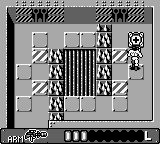
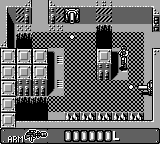
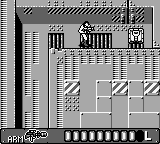
The most common one are doors with black symbols in them, when you destroy all enemies in said room the doors will open, and since they’re tied to progress, they won’t respawn. So the door will remain open and the area becomes a safe spot.
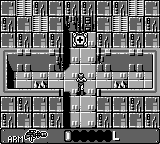
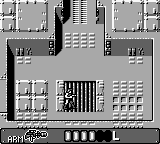
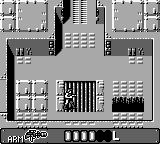
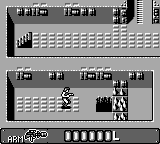
Those doors open up when you destroy all enemies in a room.
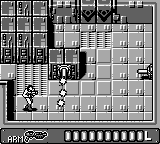
In other rooms, you will have to throw grenades at a certain wall to open up a passage. It’s not really too obvious on the room itself, but in some screens you can see places that can’t be accessed from anywhere seemingly, and that’s essentially your indication, although the walls that are destructible all have the same visuals, so while early on you wouldn’t know, at some point you will just be able to identify them just by looking at them.
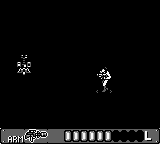
There are more obstacles than just that, such as destroying a device to light up a room or open a passage on another room, and so on. Keeping things from becoming too stale. Although the recurring dark rooms that you have to light up can become a little annoying, they’re generally some kind of puzzle, but it’s definitely a dated design choice, thankfully though, all dark rooms are safe, having no enemies or hazards, this by itself already puts it beyond some other games with darkness gimmicks.
When you clear a floor, you will find stairs that will lead to another one, from that point exploration becomes more complex, as there are more areas to navigate through. With actual navigation back and forth between floors being more common from level 2 onwards. This aspect makes it way more in-depth compared to other games of the same style on the Game Boy and even on the NES (Hey, it’s a billion times better than the NES version of Ikari Warriors). You keep going collecting keys, opening doors, solving puzzles and whatnot until you fight some bosses (generally some miniboss then a big boss at the end of the stage) and finish the level, then you go to the next.
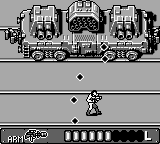
It’s not really a miniboss, but since it needs to be killed to progress in some way (activating a door in the same room or a different one), I will just call it that.
This exploration aspect might be its biggest strength, as the Game Boy would barely allow for a really fast-paced and engaging top-down combat-focused shooter. So instead, this game takes the slower approach and makes the progression less linear than most 2D shooters. I compared it to old Zelda games a few times, and at least when it comes to the dungeons, this game feels somewhat similar in structure, except it’s a shooter.
Level layouts are distinct and often involve single-screen challenges, as the game goes on it becomes more maze and puzzle-like, with a thing in one room affecting another. Again, quite similar to Zelda dungeons.
You can move in 8 directions, which is great, as the movement is really slow. I don’t think it’s as bad as the NES version of Ikari Warriors in this aspect, but it’s a bit jarring at first. You also have 3 weapons, a regular machinegun, a spread gun and a grenade launcher. You can switch between them by pressing select during normal gameplay. The weapons don’t have ammo, you can shoot as much as you want, which is good considering the enemies respawn.
Your shots are pretty big and hit enemies without any problem, it’s worth noting that because some games of this era tend to have pixel-sized bullets that make something as basic as aiming a shot feel like a nightmare. However, you bullets do have a range and do not traverse the entire screen, which isn’t a problem since that would make the game a bit too easy.
The regular machinegun keeps shooting while you hold the button. The spread gun can’t be held to keep shooting it, but it shoots in 3 directions at the same time, covering a wide range, it also deals more damage. The grenade shooter can only do one shot at a time and you have to wait for the explosion to finish before shooting again, but it deals the most damage, often one-shotting enemies if thrown at the right spot. Changing weapons is really fast, so it’s recommended to change to whatever you feel like is more convenient for each enemy, it allows for a lot of variety in the gameplay, providing a fun combat for a game that would otherwise feel barebones in that aspect.
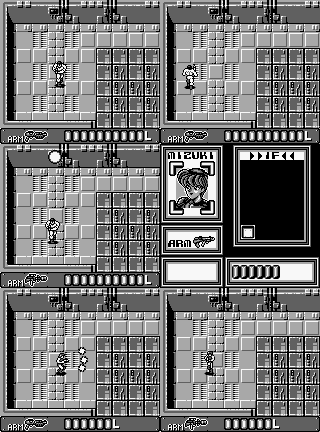
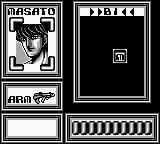
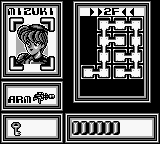
You have two playable characters, which you can switch between whenever you want. To do that you pause the game and press select on the pause screen (which shows the map of the level by the way).
Switching weapons and characters.
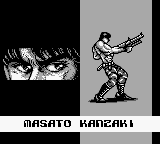
Masato Kanzaki is the default character and he moves really slowly and his health bar is pretty big.
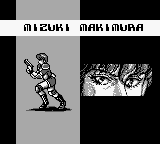
Mizuki Makimura is there from the beginning, you just have to select her on the pause screen, she has less health. She’s less slow than Masato (I wouldn’t call any character in this game exactly fast) and her shots carry the same properties, such as range and overall damage, I didn’t feel like it took more time to beat anything with her shots. She also can jump for some reason, and I’ve only found out by accident on the 3rd level, you can’t shoot when you’re in the air, so I guess this doesn’t make much of a difference. Although it does help a lot, and is require to get some few health restoring items, it’s especially good for traversing through some moving floors, it can also get you through some holes, which let you bypass some sections altogether.
Each character has their own health, so if you’re wounded, you can just change and look for a health restoring item.
Masato isn’t unplayable because of his abysmal lack of speed, but it might be a deal breaker for some players. Which is a shame, because his bigger health certainly makes up for it. Mizuki feels more enjoyable to move with, but her smaller health bar means you will have to be more careful as you can’t just tank hits.
Sure, avoiding enemies isn’t really too hard, and you can switch between them at any time, so it’s more about your playstyle than anything. I prefer Masato in areas with more enemies, and Mizuki whenever I’m just moving around. Masato is also good for bosses when you’re still learning how to dodge their attacks, Mizuki just feels better when you already know what you’re doing though.
The enemies have your general speed and range too, so it feels fair, unlike an NES port that I’ve mentioned a bit too much. The areas are never clustered with enemies either, and their placement is pretty fair, they are always within some distance when you first get into an area.
Different enemies do different damage, some do more, some do less. Some do one damage when shooting you and do more damage when they touch you (some don’t do touch damage).
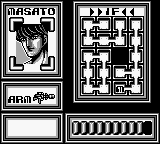
You have a map, as I mentioned, it shows up when you pause the game, it’s a very simplistic map, but it does the job. At the start it’s all black with only a tile, said tile representing your current location (and a letter represents you, M for Masato and F for Mizuki, you’d think they would just use the same letter for both since they have the same initials, but I guess not). As you explore each room you uncover more of the map, it’s a good way to keep track of where you’ve been. The environments aren’t too repetitive because the level layout tends to have standout setpieces and geometry, you generally can tell where you’ve been just by the placement of objects and enemies, but the map can help you, after all there’s so much you can make for the levels to stand in a monochrome small screen.
As you explore, you uncover more of the map, it’s handy to know where you’ve been and where you need to go.
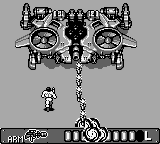
The levels get pretty tough as they go on, the first one isn’t really hard, which is good as you’re still learning the game, but by the second one it’s already considerably harder. You start to run into tougher enemies, like robots that can shoot homing missiles (which serve as sort of mini-bosses). The bosses are pretty tough, as you have to time your attacks properly and dodge. The first boss is a wake-up call, and the second boss legitimately tough, but it feels so satisfying when you get the hang of it, it never feels cheap. I like the challenge they present, as the levels get really easy once you’ve gone through them once, while the bosses always keep being a nice challenge and become even better as you get good at them.
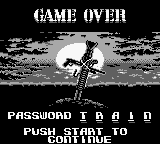
If you die, you play as the remaining character, if both die, you have to restart the entire stage. The game doesn’t save, it uses a password system, it’s not really a problem since the password is 5 letters, and it’s always an easy to remember word such as Laser or Train. Or in some cases shorter words with punctuation, such as Walk! It’s not the type of game that needs saving either, it’s a very short and simple game. I don’t think it really matters, it’s not a strike against the game, but if it does bother you too much you can just use savestates to save your progress, assuming you aren’t playing this on a regular cartridge (which I doubt is even that easily available). But the game has very few levels anyway.
This is the type of game that takes little time to restart, since its progression is more like a Zelda dungeon, so when you know what to do it’s way faster, it actually feels like a perfect game to speedrun. It’s one of those shorter games that has a more arcade-y experience, you really feel better by learning the nuances and honing your skill. It’s easy to pick up and play.
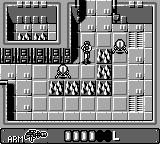
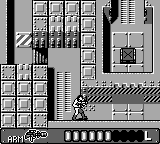
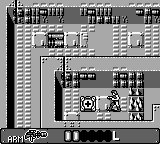
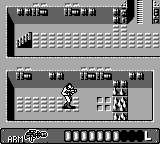
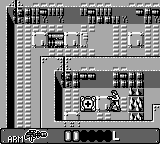
The keys start out easy to find, but get tricker as time goes on. The key at the right image requires you to fall from the lowest pit from the floor above. (And no, it’s not anything absurd to figure out, as there are no death pits, all pits in the game lead somewhere in a floor below).
This game is even friendly for anyone that speaks any language, it doesn’t have any dialogue, despite being only released in Japan, all the text is in English, and there’s barely any text, the only thing in Japanese is the title screen. Despite that, there is a fan translation, which you can use if you feel like it.
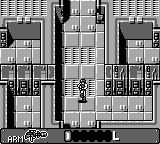
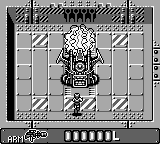
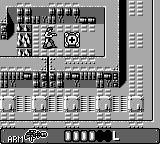
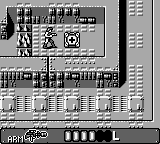
Once you find this generator (?) room, you can’t go back, when you destroy it, it will teleport you to the boss room. Pay attention to the map or the level layout, if it feels like it’s about to end and you’re low on HP, go find a health pickup and come back later.
The game does have some flaws, sure. As I said, it’s a bit slow. Some passages aren’t as well telegraphed, some setpieces are a bit clunky like the narrow doors that feel a bit finicky to get in some times, it’s easy to get a dumb hit or two when you’re trying to enter a narrow door just because your character has a hard time fitting in, some enemies are more annoying to kill than they should be, and the floor that pushes you in a certain direction (not too annoying, and Mizuki’s jump can help with that), the fact that enemies respawn can be annoying for some (even if doesn’t bother me here personally). Enemies on later stages become a bit of hit sponges, taking even more than one grenade to kill. In stage 4 in particular, the spread shot is going to be your best friend, as it’s the most effective thing by far, since you can mash the button to shoot fast and it deals more damage, the grenade is too slow for a lot of situations here, not to mention harder to aim, and the regular machinegun just doesn’t cut it, despite being the fastest by default, it won’t do much. These damage sponge enemies tend to feel a bit cheap since they take so many hits to kill that it’s often almost inevitable that they might hit you.
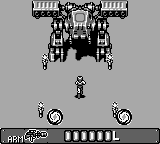
Bosses are the game’s highlight in terms of combat, there’s always a strategy to beat them, feeling very satisfying. I’m not going to spoil the final boss in any pictures here.
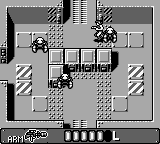
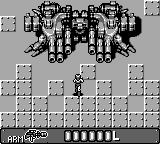
Actually, stage 4 is so hard that you better not take any hits in the first few segments, I seriously let myself get killed every time I took a single hit at the beginning of the level because I knew it would be better restarting since I would need health for the later sections. I feel like the first 3 levels aren’t cheap with difficulty because tough enemies are few and far between, but by stage 4, everything feels so extremely hard to kill and deals a lot more damage, it wouldn’t be too bad. I’m dedicating an entire paragraph just for this level because there’s a lot to take in. It’s around here that good use of the weapons becomes essential, as good aiming of the grenade can dispose of certain enemies in one hit, and mashing the spread shot is a difference between life and death in rooms with more than one enemy. Even the map will be pretty much essential here, as the layout is way more complex than anything before. This level tests your skills, which can be satisfying, but the game doesn’t require you to be this precise until this level, which can feel jarring, as even though each level is significantly harder than the previous one, stage 4 somehow still feels like a steep difficulty spike compared to the previous levels. One enemy in particular that has its debut on stage 3, is way more prominent in stage 4, it tends to a lot of damage significantly fast and is a bitch to kill. It’s a little machine that stays on top of a bunch of blocks and it shoots grenades at you, it stops at little intervals, but it’s never not annoying, as it’s so easy to get cornered by the explosions. It wouldn’t be a problem if it died easily, but it doesn’t, it takes a lot of hits with the grenade, it can only be attacked with the grenade, if you’re good with your placement, you might dispose of it quickly, but it’s hard to do so without being hit at least once, and it’s so finicky as when it gets hit too. They’re easily my least favorite enemy in the entire game.
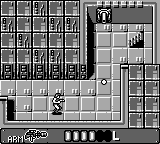
Hello, bane of my existence!
Stage 4 drags down a lot of the experience, and little design choices that wouldn’t raise any questions actual flaws. Such as: the fact that when a character dies, there’s no way to revive them, it wouldn’t be a problem if the level wasn’t so unforgiving with enemies that destroy your life bar being in almost every room. The limited health supplies wouldn’t feel too bad if you could at least take them with you and use them when you need, or if you could revive the dead partner by using it. Quite often you will find yourself annoyed that your character is dead in mid-way through the level and has no way of being revived, since by then you most likely will die and have to do everything from the beginning.
Health pickups aren’t too rare, and never despawn if you don’t pick them up, so you can save them for later.
It’s unnaceptable that in some cramped rooms, there are damage sponge enemies that will almost certainly hit you before you kill them. The problem is that enemies can hit you as they’re exploding, and if you leave the screen during that animation, they will respawn (even if they’re the type that doesn’t respawn after dying). So in situations like this, your only saviour is mashing the spread shot like your life depends on it (which it does in-game at least) and hope you kill the enemy before it hits you, if it’s too close but it doesn’t seem close to dying, leave the screen and try again. If there are two and you can manage it, try to kill one and avoid the other one altogether, easier said than done, but it helps not taking a hit sometimes if you just run past it. This level is really long too. A level this tough and long with a hard boss makes you wish it’s the last one, and thankfully, it is! The game really doesn’t overstay its welcome by then and finally beating it feels very satisfying.
While the whole game can be beaten with any character, Mizuki’s jump is required for some optional health items. Otherwise, the only thing it does is help out with some moving floors and jumping over a few pits to trivialize some sections. That does make her a very helpful character to have around, even if you don’t use her, her only downfall is low HP.
It’s worth noting that a lot of what I mentioned throughout this article was learned by messing around, as the game doesn’t tell you any of that. The destructible walls and floor (the floor in particular is generally really difficult to parse as destructible, as it’s not exactly too obvious), changing characters, changing weapons, the fact that Mizuki can jump and a lot of things are never informed anywhere, you just figure out on your own.
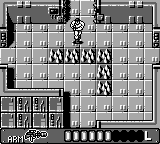
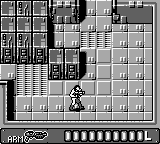
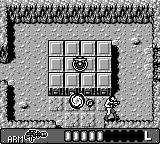
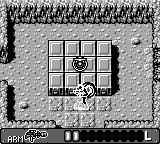
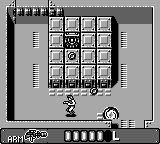
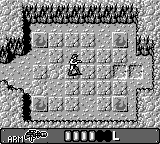
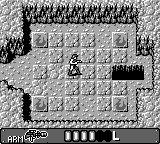
Would you be able to tell some of these floors are breakable by using grenades on your first time?
I know this was made back when manuals existed and had information the game wouldn’t be able to hold due to limitations, or just for convenience sake, it made sense back then, so I’m not really too bothered by this. I discovered most of these pretty soon too, all in the first level essentially, it’s a perfect playing ground for you to test everything out, although as I’ve mentioned, I didn’t learn about Mizuki’s jump until the third level, so that could be a problem, the GB doesn’t have many buttons so it didn’t take too long to check every function, but I’m used to that and I’m aware this might a problem for some who are used to modern games, so I’m just making it clear before you go into it.
Conclusion
Overall, my first thoughts after beating it: It’s a really fun game, not sure if it’s a hidden gem per say, but it depends on your tastes. It’s definitely a solid game, but I do recognize that it’s not for everyone for many of the reasons I mentioned throught the review. I really enjoyed it, it’s a challenging game that doesn’t start too hard (actually it doesn’t start hard at all), which makes it really easy to get into. The music is pretty nice, though nothing that captured my attention so much. The visuals are quite good, they do their job and quite capture your imagination. Even when the game gets really though, it doesn’t feel too bad after you get more skilled at it, although the 4th level especially feels too hard when you first get to it, to the point where I found a lot of things really cheap, but as I got accostumed and restarted after a few deaths, I didn’t have much problems and even beat the final boss with way less retries or health than I thought I’d have to. Due to the dungeon structure of the levels, I find the game to be quite replayable too, as it’s interesting to go back and see how better you’ve got since the first time, however due to the simplicity and short length, it’s obviously not something that would be asking for me to come back all the time, but I can definitely imagine myself having fun going into it once in a while, trying to beat it all in one sitting. In this case, the short length really benefits the game, even if that kinda makes the difficulty curve not as smooth.
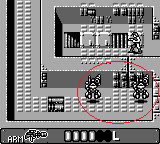
After taking a break following my first time beating it, and coming back to it later, I still stand by pretty much all of it, the game starts out pretty friendly, difficulty escalates and requires you to get better, but stage 4 can be a bit too much in some parts, if only because of some particular enemies and their placement(circled on the image down there). The final boss is really tough, however at least it feels justified.
The worst enemies in the entire game, outranking even those grenade turret things I’ve mentioned before. These enemies move quite fast towards you, are always in a pair, are always in cramped spaces, and are a massive pain in the ass.
The final boss still feels satisfying, the entirety of stage 4 gets easier on subsequent playthroughs, as a lot of what you have to do stays in your memory, I still find it quite hard, but besides those damned enemies I mentioned above, it’s honestly a fine level in hindsight, but the fact that I found it so frustrating in the first place is pretty telling. Still though, I do recommend that you at least try out the game, it’s really fun, and if you’re better than me (which is likely), you will have less problems with the tough moments, and if you’re not, the first 3 stages are still pretty enjoyable on their own. I will definitely be replaying it, though the flaws I mentioned are still to be taken into consideration. Deep down, the point of this article is to just spread awareness about it and hopefully make someone want to play it.
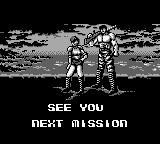
There is no Ikari no Yousai 3, but there’s obviously the first game on the GB (which was released outside of Japan under the name Fortified Zone), and there’s also a Super Famicom game (simply called Ikari no Yousai), which came after this, so there will definitely be a next mission. Until then, see you!



 Rainy's Game Corner