(Press CTRL + F and copy-paste one of the words below into the search bar that shows up on the bottom of the screen to skip to that particular part).
• Introduction
• Review
• Conclusion
Introduction
There are many third-party publishers and developers in the game industry that are very well known and have been around for a long time. Most people will mention Capcom, Konami and Namco, if they have more knowledge they might mention SNK, Atlus, Tecmo, Nippon Ichi Software and a whole lot more.
But one company that generally gets overlooked is Jaleco.

I’ve played a fair amount of games by this company, or at least know about a good amount of games that they’ve made or published.
Jaleco is interesting, despite not being too notorious, most people who’ve played some of their output will tell you positive things about most of it, but I believe none of their games ever became more than cult classics or had more than a niche following.
(Although they seemingly were more of a publisher than a developer, so that might be a reason too).
If you see some of those “Worst Game Art” articles or videos, then you might actually see them being mentioned, as at least on the US and Europe, they often had some notoriously bad box art (such as the infamous Irritating Stick for the PS1, Rival Turf and Brawl Brothers for the SNES or Karnaaj Rally for the GBA). Which may have contributed for their overall obscurity, as people generally avoid buying games with ugly art on the cover.
Enthuasiats of niche games and hidden gems may be familiar with some games like the Rushing Beat trilogy for the SNES (which had a different name for each game outside of Japan for some reason, so the series had a rough time catching on with the general public) and Avenging Spirit for the Game Boy, a cute game that I will definitely cover in the future.
Ugly cover art or not, most of the time when you see someone talking about one of their games, they will mention that it’s a pretty solid title, maybe it has some rough aspect to it that doesn’t make it amazing, but it’s rarely bad in quality.
The game we’re talking about today is one of those solid titles. And indeed, might not be amazing or stand out in some major way, but it’s a pretty fun game for sure.
We’re talking about a Japan-only game called Ikari no Yousai 2 (translated as Fortress of Fury 2) for the Game Boy.
Review
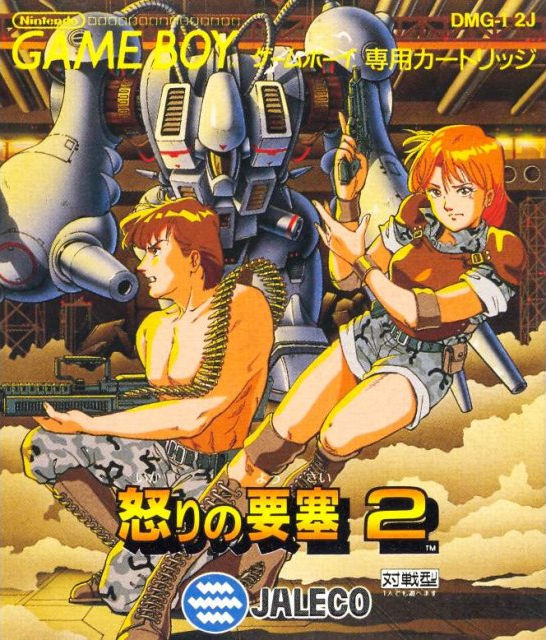
To be fair, this was made in an era where box art quality varied from region to region.
(Image from Play-Asia).
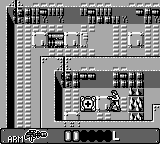
Ikari no Yousai 2 is an overhead shooter where you move rather slowly from room to room completing challenges. There is no continuous scrolling when going to a different room, rather it works like in older 2D Zelda games, such as A Link to the Past and Link’s Awakening. In fact, progression is quite similar to the dungeons in those games.
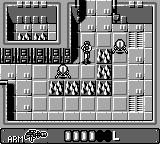
You explore each room of a fortress, trying to get to the exit. Along the way you will find enemies that respawn when you come back to that room (with some exceptions), again just like in old Zelda games. They’re pretty easy to deal with and their mobility is similar to yours, so it’s never overwhelming.
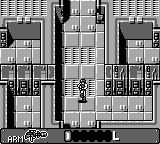
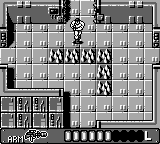
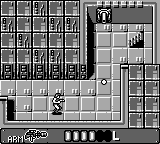
Some rooms you find will look like dead ends, but generally have something hidden in them and you will need to accomplish some objective to give you progress or a healing item.
The most common one are doors with black symbols in them, when you destroy all enemies in said room the doors will open, and since they’re tied to progress, they won’t respawn.
So the door will remain open and the area becomes a safe spot.
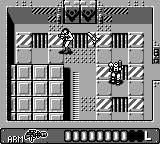
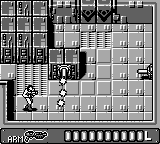
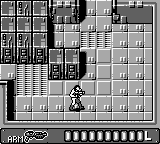
In other rooms, you will have to throw grenades at a certain wall to open up a passage. It’s not really too obvious on the room itself, but in some screens you can see places that can’t be accessed from anywhere seemingly, and that’s essentially your indication, although the walls that are destructible all have the same visuals, so while early on you wouldn’t know, at some point you will just be able to identify them just by looking at them.
There are more obstacles than just that, such as destroying a device to light up a room or open a passage on another room, and so on. Keeping things from becoming too stale.
Although the recurring dark rooms that you have to light up can become a little annoying, they’re generally some kind of puzzle, but it’s definitely a dated design choice, thankfully though, all dark rooms are safe, having no enemies or hazards, this by itself already puts it beyond some other games with darkness gimmicks.
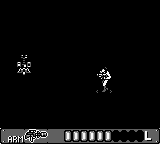
When you clear a floor, you will find stairs that will lead to another one, from that point exploration becomes more complex, as there are more areas to navigate through.
With actual navigation back and forth between floors being more common from level 2 onwards.
This aspect makes it way more in-depth compared to other games of the same style on the Game Boy and even on the NES (Hey, it’s a billion times better than the NES version of Ikari Warriors). You keep going collecting keys, opening doors, solving puzzles and whatnot until you fight some bosses (generally some miniboss then a big boss at the end of the stage) and finish the level, then you go to the next.
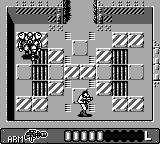
This exploration aspect might be its biggest strength, as the Game Boy would barely allow for a really fast-paced and engaging top-down combat-focused shooter.
So instead, this game takes the slower approach and makes the progression less linear than most 2D shooters. I compared it to old Zelda games a few times, and at least when it comes to the dungeons, this game feels somewhat similar in structure, except it’s a shooter.
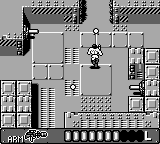
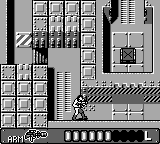
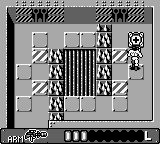
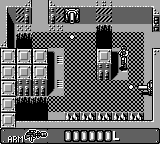
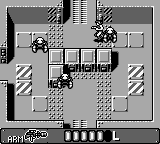
Again, quite similar to Zelda dungeons.
You can move in 8 directions, which is great, as the movement is really slow. I don’t think it’s as bad as the NES version of Ikari Warriors in this aspect, but it’s a bit jarring at first. You also have 3 weapons, a regular machinegun, a spread gun and a grenade launcher. You can switch between them by pressing select during normal gameplay. The weapons don’t have ammo, you can shoot as much as you want, which is good considering the enemies respawn.
Your shots are pretty big and hit enemies without any problem, it’s worth noting that because some games of this era tend to have pixel-sized bullets that make something as basic as aiming a shot feel like a nightmare.
However, you bullets do have a range and do not traverse the entire screen, which isn’t a problem since that would make the game a bit too easy.
The regular machinegun keeps shooting while you hold the button. The spread gun can’t be held to keep shooting it, but it shoots in 3 directions at the same time, covering a wide range, it also deals more damage. The grenade shooter can only do one shot at a time and you have to wait for the explosion to finish before shooting again, but it deals the most damage, often one-shotting enemies if thrown at the right spot. Changing weapons is really fast, so it’s recommended to change to whatever you feel like is more convenient for each enemy, it allows for a lot of variety in the gameplay, providing a fun combat for a game that would otherwise feel barebones in that aspect.
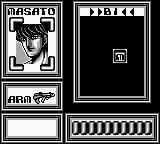
You have two playable characters, which you can switch between whenever you want. To do that you pause the game and press select on the pause screen (which shows the map of the level by the way).
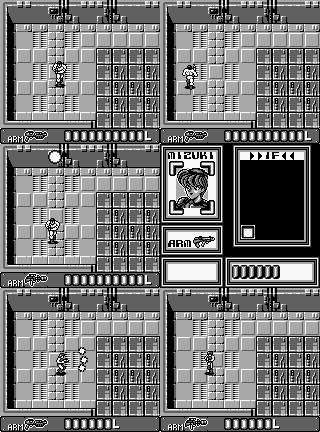
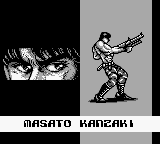
Masato Kanzaki is the default character and he moves really slowly and his health bar is pretty big.
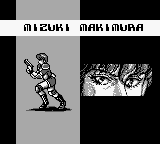
Mizuki Makimura is there from the beginning, you just have to select her on the pause screen, she has less health. She’s less slow than Masato (I wouldn’t call any character in this game exactly fast) and her shots carry the same properties, such as range and overall damage, I didn’t feel like it took more time to beat anything with her shots. She also can jump for some reason, and I’ve only found out by accident on the 3rd level, you can’t shoot when you’re in the air, so I guess this doesn’t make much of a difference. Although it does help a lot, and is require to get some few health restoring items, it’s especially good for traversing through some moving floors, it can also get you through some holes, which let you bypass some sections altogether.
Each character has their own health, so if you’re wounded, you can just change and look for a health restoring item.
Masato isn’t unplayable because of his abysmal lack of speed, but it might be a deal breaker for some players. Which is a shame, because his bigger health certainly makes up for it. Mizuki feels more enjoyable to move with, but her smaller health bar means you will have to be more careful as you can’t just tank hits.
Sure, avoiding enemies isn’t really too hard, and you can switch between them at any time, so it’s more about your playstyle than anything. I prefer Masato in areas with more enemies, and Mizuki whenever I’m just moving around.
Masato is also good for bosses when you’re still learning how to dodge their attacks, Mizuki just feels better when you already know what you’re doing though.
The enemies have your general speed and range too, so it feels fair, unlike an NES port that I’ve mentioned a bit too much. The areas are never clustered with enemies either, and their placement is pretty fair, they are always within some distance when you first get into an area.
Different enemies do different damage, some do more, some do less. Some do one damage when shooting you and do more damage when they touch you (some don’t do touch damage).
You have a map, as I mentioned, it shows up when you pause the game, it’s a very simplistic map, but it does the job.
At the start it’s all black with only a tile, said tile representing your current location (and a letter represents you, M for Masato and F for Mizuki, you’d think they would just use the same letter for both since they have the same initials, but I guess not). As you explore each room you uncover more of the map, it’s a good way to keep track of where you’ve been. The environments aren’t too repetitive because the level layout tends to have standout setpieces and geometry, you generally can tell where you’ve been just by the placement of objects and enemies, but the map can help you, after all there’s so much you can make for the levels to stand in a monochrome small screen.
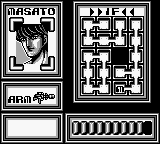
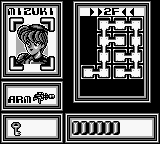
The levels get pretty tough as they go on, the first one isn’t really hard, which is good as you’re still learning the game, but by the second one it’s already considerably harder.
You start to run into tougher enemies, like robots that can shoot homing missiles (which serve as sort of mini-bosses).
The bosses are pretty tough, as you have to time your attacks properly and dodge. The first boss is a wake-up call, and the second boss legitimately tough, but it feels so satisfying when you get the hang of it, it never feels cheap. I like the challenge they present, as the levels get really easy once you’ve gone through them once, while the bosses always keep being a nice challenge and become even better as you get good at them.
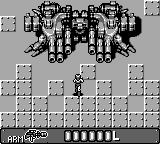
If you die, you play as the remaining character, if both die, you have to restart the entire stage.
The game doesn’t save, it uses a password system, it’s not really a problem since the password is 5 letters, and it’s always an easy to remember word such as Laser or Train.
Or in some cases shorter words with punctuation, such as Walk!
It’s not the type of game that needs saving either, it’s a very short and simple game. I don’t think it really matters, it’s not a strike against the game, but if it does bother you too much you can just use savestates to save your progress, assuming you aren’t playing this on a regular cartridge (which I doubt is even that easily available).
But the game has very few levels anyway.
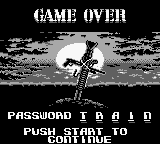
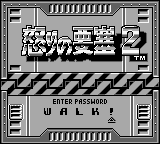
This is the type of game that takes little time to restart, since its progression is more like a Zelda dungeon, so when you know what to do it’s way faster, it actually feels like a perfect game to speedrun.
It’s one of those shorter games that has a more arcade-y experience, you really feel better by learning the nuances and honing your skill. It’s easy to pick up and play.
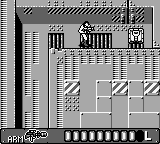
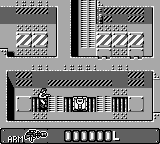
(And no, it’s not anything absurd to figure out, as there are no death pits, all pits in the game lead somewhere in a floor below).
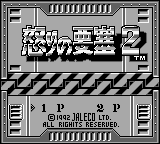
This game is even friendly for anyone that speaks any language, it doesn’t have any dialogue, despite being only released in Japan, all the text is in English, and there’s barely any text, the only thing in Japanese is the title screen. Despite that, there is a fan translation, which you can use if you feel like it.
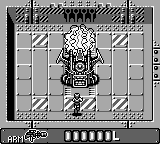
Pay attention to the map or the level layout, if it feels like it’s about to end and you’re low on HP, go find a health pickup and come back later.
The game does have some flaws, sure. As I said, it’s a bit slow. Some passages aren’t as well telegraphed, some setpieces are a bit clunky like the narrow doors that feel a bit finicky to get in some times, it’s easy to get a dumb hit or two when you’re trying to enter a narrow door just because your character has a hard time fitting in, some enemies are more annoying to kill than they should be, and the floor that pushes you in a certain direction (not too annoying, and Mizuki’s jump can help with that), the fact that enemies respawn can be annoying for some (even if doesn’t bother me here personally). Enemies on later stages become a bit of hit sponges, taking even more than one grenade to kill. In stage 4 in particular, the spread shot is going to be your best friend, as it’s the most effective thing by far, since you can mash the button to shoot fast and it deals more damage, the grenade is too slow for a lot of situations here, not to mention harder to aim, and the regular machinegun just doesn’t cut it, despite being the fastest by default, it won’t do much.
These damage sponge enemies tend to feel a bit cheap since they take so many hits to kill that it’s often almost inevitable that they might hit you.
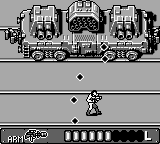
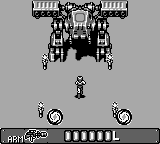
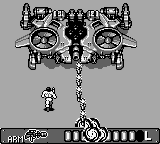
I’m not going to spoil the final boss in any pictures here.
Actually, stage 4 is so hard that you better not take any hits in the first few segments, I seriously let myself get killed every time I took a single hit at the beginning of the level because I knew it would be better restarting since I would need health for the later sections. I feel like the first 3 levels aren’t cheap with difficulty because tough enemies are few and far between, but by stage 4, everything feels so extremely hard to kill and deals a lot more damage, it wouldn’t be too bad.
I’m dedicating an entire paragraph just for this level because there’s a lot to take in.
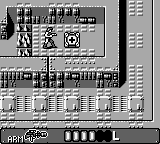
It’s around here that good use of the weapons becomes essential, as good aiming of the grenade can dispose of certain enemies in one hit, and mashing the spread shot is a difference between life and death in rooms with more than one enemy. Even the map will be pretty much essential here, as the layout is way more complex than anything before. This level tests your skills, which can be satisfying, but the game doesn’t require you to be this precise until this level, which can feel jarring, as even though each level is significantly harder than the previous one, stage 4 somehow still feels like a steep difficulty spike compared to the previous levels. One enemy in particular that has its debut on stage 3, is way more prominent in stage 4, it tends to a lot of damage significantly fast and is a bitch to kill.
It’s a little machine that stays on top of a bunch of blocks and it shoots grenades at you, it stops at little intervals, but it’s never not annoying, as it’s so easy to get cornered by the explosions. It wouldn’t be a problem if it died easily, but it doesn’t, it takes a lot of hits with the grenade, it can only be attacked with the grenade, if you’re good with your placement, you might dispose of it quickly, but it’s hard to do so without being hit at least once, and it’s so finicky as when it gets hit too. They’re easily my least favorite enemy in the entire game.
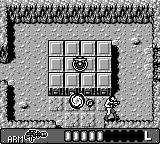
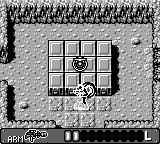
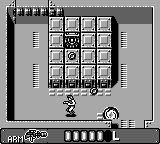
Stage 4 drags down a lot of the experience, and little design choices that wouldn’t raise any questions actual flaws.
Such as: the fact that when a character dies, there’s no way to revive them, it wouldn’t be a problem if the level wasn’t so unforgiving with enemies that destroy your life bar being in almost every room. The limited health supplies wouldn’t feel too bad if you could at least take them with you and use them when you need, or if you could revive the dead partner by using it. Quite often you will find yourself annoyed that your character is dead in mid-way through the level and has no way of being revived, since by then you most likely will die and have to do everything from the beginning.
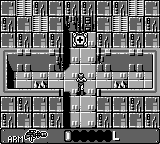
It’s unnaceptable that in some cramped rooms, there are damage sponge enemies that will almost certainly hit you before you kill them. The problem is that enemies can hit you as they’re exploding, and if you leave the screen during that animation, they will respawn (even if they’re the type that doesn’t respawn after dying).
So in situations like this, your only saviour is mashing the spread shot like your life depends on it (which it does in-game at least) and hope you kill the enemy before it hits you, if it’s too close but it doesn’t seem close to dying, leave the screen and try again. If there are two and you can manage it, try to kill one and avoid the other one altogether, easier said than done, but it helps not taking a hit sometimes if you just run past it.
This level is really long too.
A level this tough and long with a hard boss makes you wish it’s the last one, and thankfully, it is! The game really doesn’t overstay its welcome by then and finally beating it feels very satisfying.
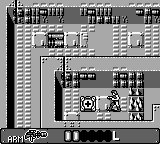
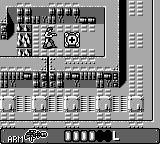
Otherwise, the only thing it does is help out with some moving floors and jumping over a few pits to trivialize some sections.
That does make her a very helpful character to have around, even if you don’t use her, her only downfall is low HP.
It’s worth noting that a lot of what I mentioned throughout this article was learned by messing around, as the game doesn’t tell you any of that. The destructible walls and floor (the floor in particular is generally really difficult to parse as destructible, as it’s not exactly too obvious), changing characters, changing weapons, the fact that Mizuki can jump and a lot of things are never informed anywhere, you just figure out on your own.
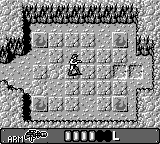
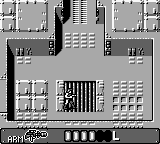
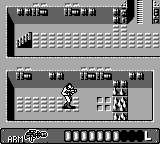
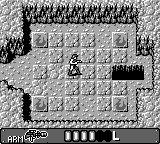
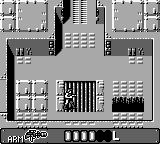
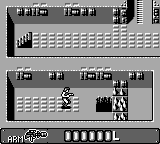
I know this was made back when manuals existed and had information the game wouldn’t be able to hold due to limitations, or just for convenience sake, it made sense back then, so I’m not really too bothered by this.
I discovered most of these pretty soon too, all in the first level essentially, it’s a perfect playing ground for you to test everything out, although as I’ve mentioned, I didn’t learn about Mizuki’s jump until the third level, so that could be a problem, the GB doesn’t have many buttons so it didn’t take too long to check every function, but I’m used to that and I’m aware this might a problem for some who are used to modern games, so I’m just making it clear before you go into it.
Conclusion
Overall, my first thoughts after beating it:
It’s a really fun game, not sure if it’s a hidden gem per say, but it depends on your tastes. It’s definitely a solid game, but I do recognize that it’s not for everyone for many of the reasons I mentioned throught the review.
I really enjoyed it, it’s a challenging game that doesn’t start too hard (actually it doesn’t start hard at all), which makes it really easy to get into. The music is pretty nice, though nothing that captured my attention so much.
The visuals are quite good, they do their job and quite capture your imagination. Even when the game gets really though, it doesn’t feel too bad after you get more skilled at it, although the 4th level especially feels too hard when you first get to it, to the point where I found a lot of things really cheap, but as I got accostumed and restarted after a few deaths, I didn’t have much problems and even beat the final boss with way less retries or health than I thought I’d have to.
Due to the dungeon structure of the levels, I find the game to be quite replayable too, as it’s interesting to go back and see how better you’ve got since the first time, however due to the simplicity and short length, it’s obviously not something that would be asking for me to come back all the time, but I can definitely imagine myself having fun going into it once in a while, trying to beat it all in one sitting. In this case, the short length really benefits the game, even if that kinda makes the difficulty curve not as smooth.
After taking a break following my first time beating it, and coming back to it later, I still stand by pretty much all of it, the game starts out pretty friendly, difficulty escalates and requires you to get better, but stage 4 can be a bit too much in some parts, if only because of some particular enemies and their placement(circled on the image down there). The final boss is really tough, however at least it feels justified.
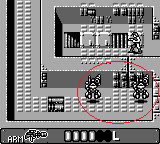
These enemies move quite fast towards you, are always in a pair, are always in cramped spaces, and are a massive pain in the ass.
The final boss still feels satisfying, the entirety of stage 4 gets easier on subsequent playthroughs, as a lot of what you have to do stays in your memory, I still find it quite hard, but besides those damned enemies I mentioned above, it’s honestly a fine level in hindsight, but the fact that I found it so frustrating in the first place is pretty telling.
Still though, I do recommend that you at least try out the game, it’s really fun, and if you’re better than me (which is likely), you will have less problems with the tough moments, and if you’re not, the first 3 stages are still pretty enjoyable on their own.
I will definitely be replaying it, though the flaws I mentioned are still to be taken into consideration. Deep down, the point of this article is to just spread awareness about it and hopefully make someone want to play it.
 Rainy's Game Corner